On Word Choice

This is a great post on word choice in writing:

1. A Series of Word Choices

Here’s why this matters: because both writing and storytelling comprise, at the most basic level, a series of word choices. Words are the building blocks of what we do. They are the atoms of our elements. They are the eggs in our omelets. They are the shots of liquor in our cocktails. Get it right? Serendipity. Get it wrong? The air turns to arsenic, that cocktail makes you puke, this omelet tastes like balls.

 2. Words Define Reality

Words are like LEGO bricks: the more we add, the more we define the reality of our playset. “The dog fucked the chicken” tells us something. “The Great Dane fucked the chicken” tells us more. “The Great Dane fucked the bucket of fried chicken on the roof of Old Man Dongweather’s barn, barking with every thrust” goes the distance and defines reality in a host of ways (most of them rather unpleasant). You can over-define. Too many words spoil the soup. Find the balance between clarity, elegance, and evocation.

 3. The “Hot and Cold” Game

You know that game — “Oh, you’re cold, colder, colder — oh! Now you’re getting hot! Hotter! Hotter still! Sizzling! Yay, you found the blueberry muffin I hid under the radiator two weeks ago!” –? Word choice is like a textual version of that game where you try to bring the reader closer to understanding the story you’re trying to tell. Strong, solid word choice allows us to strive for clarity (hotter) and avoid confusion (colder).

 4. Most with Fewest

Think of it like a different game, perhaps: you’re trying to say as much as possible with as few words as you can muster. Big ideas put as briefly as you are able. Maximum clarity with minimum words.

 5. The Myth of the Perfect Word

Finding the perfect word is as likely as finding a downy-soft unicorn with a pearlescent horn riding a skateboard made from the bones of your many enemies. Get shut of this notion. The perfect is the enemy of the good. For every sentence and every story you have a plethora of right words. Find a good word. Seek astrong word. But the hunt for a perfect word will drive you into a wide-eyed froth. Though, according to scholars, “nipplecookie” is in fact the perfect word. That’s why Chaucer used it so often. Truth.

Read the rest of this pithy, funny post (note advice #9 and #11). I like the conclusion:

Write to be read. Choose words that have flavor but do not overwhelm, that reach out instead of pushing back, that sound right to the ear and carry with them a kind of rhythm. Write with confidence, not with arrogance. Don’t be afraid to play with words. But be sure to let the reader play with you.

And after you’re done reading the post, and you’re serious about improving your craft (of writing), make sure to grab Stephen King’s classic On Writing. It’s the best book I’ve read filled with practical advice on how you can improve your writing.

On Successful People

Daniel Tenner, who muses on startups and entrepreneurship at swombat.com, has a great post reflecting on what makes successful people successful:

If you want to get wealthy, you have two approaches: count on a lottery ticket type of event (e.g. winning the lottery, or winning the startup lottery…), or set out building, growing and maintaining a base of wealth. Ignoring those who choose the first path (because they are clearly irrational), if you look at the behaviours of people who tend to go from little wealth to a lot more wealth, you can observe that they tend to make decisions that optimise how much money they make (this sounds obvious, but is actually quite an insight).

They’ll work in jobs that pay more, or start businesses that make money. In my experience, those who have a fair bit of money are not profligate – they spend sensibly, agonise over larger expenses, are conscious of having to maintain and grow their savings, and so on. Whereas the average person will optimise for today’s enjoyment (and that may well be the right choice for many), those who are money-minded tend to optimise for accumulating more money and spending less money. All these decisions add up over the decades, and they also compound over each other. When you have £100k in the bank, you can make wealth-preserving decisions (e.g. buying some Apple stock a few years ago!) that will provide a much larger return than what you could do when you have just £10k or even £0.

Because of all this, the difference between someone who consistently makes decisions that preserve and augment weatlh, and those who don’t, can easily get to be very large.

With non-financial success, this process is much harder to observe, but I think it’s still a big factor. Decades of making successful decisions that add to whatever it is you want to do will pile up and compound and get you there. Waiting for that one big hit to get you to the stars, on the other hand, will not. Smaller successes build up your “success wealth”, in the form of experience, connections, wisdom, knowledge, skill, and so on.

Read the rest of the post to learn of Daniel’s thoughts on self-sacrifice and growth.

Redesigning the Cover of Vladimir Nabokov’s Lolita

In 2009, Venus febriculosa, a blog run by John Bertram, held a book cover competition, asking entrants to redesign Vladimir Nabokov’s classic novel Lolita. Now, Bertram is publishing an entire book of new covers for the novel, each contributed by a prominent designer. Bertram told Imprint that the idea for the contest came after stumbling across Nabokov scholar and translator Dieter E. Zimmer’s gallery of Lolita covers and realizing that they were, well, pretty bad. The contest was marginally successfully, and John Bertram adds:

I sought out well-known designers and artists who I thought would be able to embrace the challenge.

At the same time, I sensed that Nabokov scholars had their own important contributions to make toward such a study and envisioned a multidisciplinary project of images and texts that addressed what such a cover means. I was especially anxious that Lolita herself not get lost in the shuffle, so I sought advice and recommendations from Sheila Levrant de Bretteville, co-founder of the Woman’s Building in Los Angeles, and currently director of graduate studies in graphic design at the Yale School of Art. I am delighted that Sian Cook and Teal Triggs, co-founders of the Women’s Design + Research Unit, agreed to be involved as well as Ellen Pifer, whose essays about Lolita are constant reminders that at the heart of the novel is an innocent abused child. At one point I entertained the notion of only having contributions by women, but, as it is, nearly two-thirds of the covers and half of the essays are by women.

A selection of final designs are below:

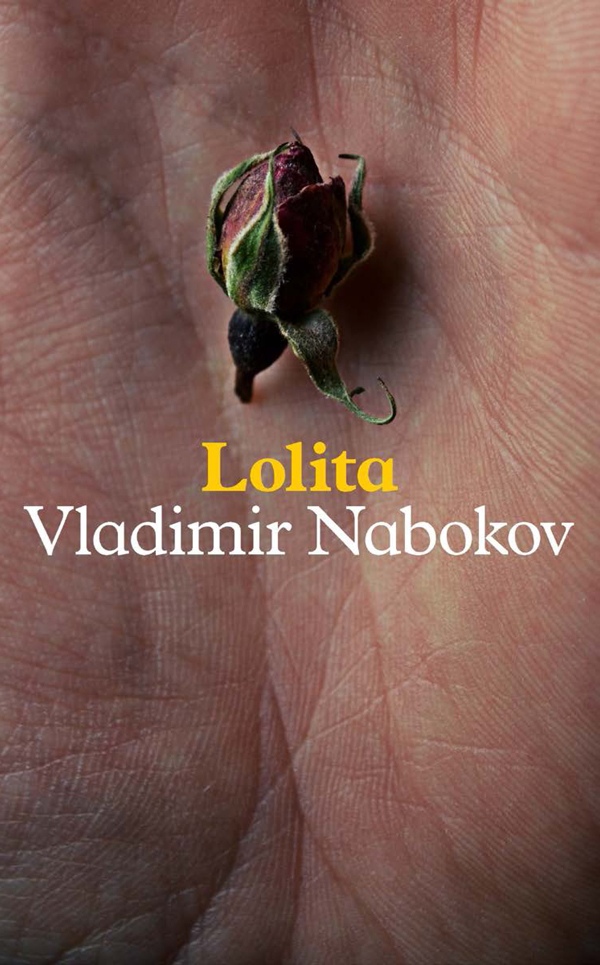
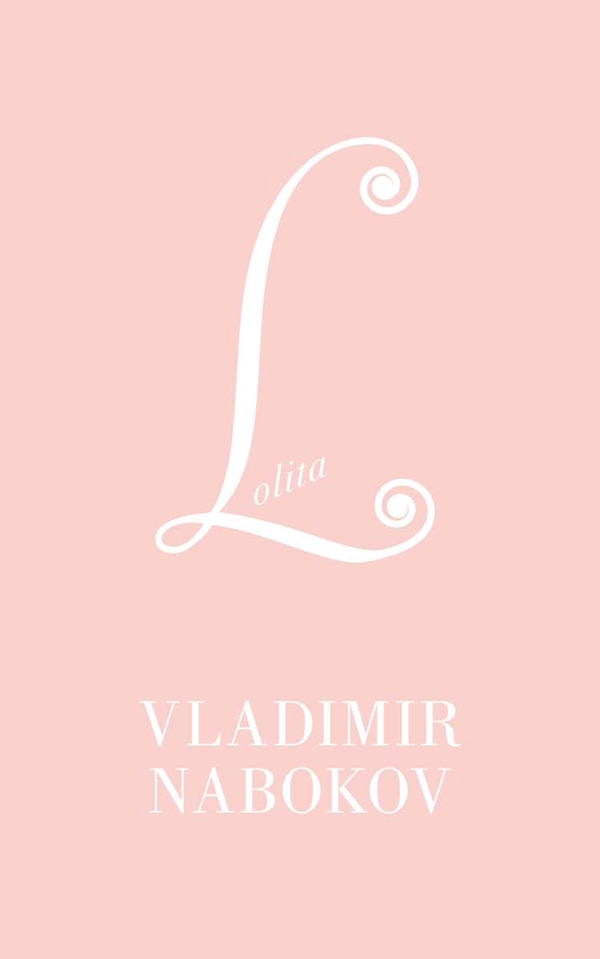
Lolita cover design by Ben Wiseman

Lolita cover design by Kelly Blair

Lolita cover design by Rachel Berger

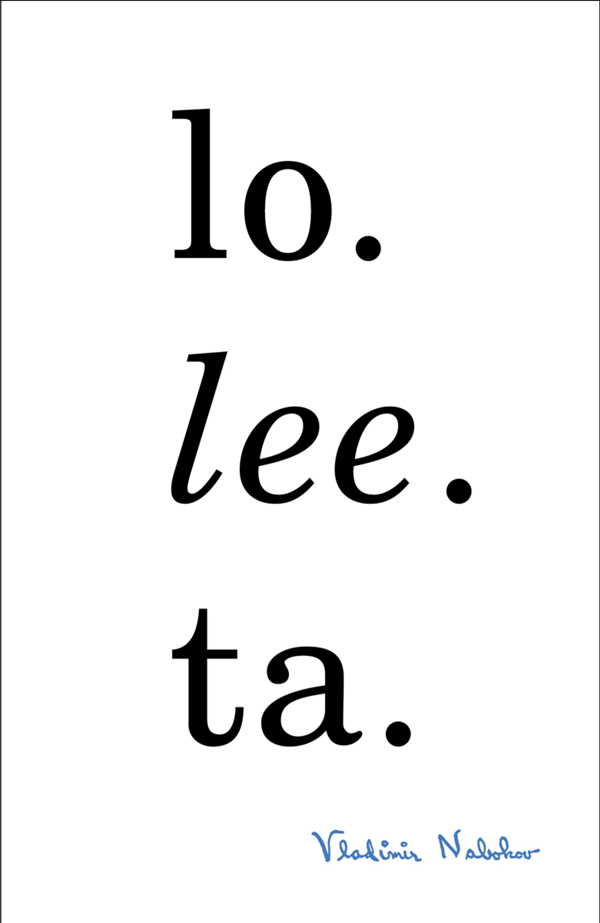
But my favorite design is the one below by Peter Mendesulnd. I think it evokes the “tip of the tongue” phenomenon that Nabokov wants the reader to feel as you read the first sentence (“Lolita, light of my life, fire of my loins. My sin, my soul. Lo-lee-ta: the tip of the tongue taking a trip of three steps down the palate to tap, at three, on the teeth. Lo. Lee. Ta.):

Lolita cover by Peter Mendelsund.

The version of Lolita that I own is this one (Megan Wilson for the Vintage edition), and I think it’s a great cover. But certainly, I’d love to see any of the designs featured above on my bookshelf.

###

If this topic fascinates you, then check out the following resources:

1) “Recovering Lolita” at Imprint Mag.

2) Jacket Mechanical’s two posts on book cover redesign of Lolita.

3) A Flickr set of more than 160 redesigns of the Lolita cover.

A Brief History of Cannibalism

Steven Shapin, who teaches history of science at Harvard, reviews Cătălin Avramescu’s An Intellectual History of Cannibalism for The Los Angeles Review of Books. The summary is brief, but it’s an excellent primer of how cannibalism has developed (and been misunderstood) over the generations:

Modern condemnations of cannibalism largely set aside questions of moral law or natural law, with their suppositions about the nature of human beings, and thus what is unnatural. These are not assumptions we’re comfortable with these days; chacun à son goût is more to our taste. Formal prosecutions of modern anthropophagists — when they happen — now fasten on attendant crimes, notably, though not necessarily, murder. Cannibalism can be judged a sign of insanity, and the perpetrator locked up not for a criminal act but for mental derangement likely to endanger himself or the community. In 1980, the Poughkeepsie, New York, murderer and testicle-eater Albert Fentress was found not guilty by reason of insanity and committed to a psychiatric hospital. The more famous, but less real, Dr. Hannibal (“the Cannibal”) Lecter was confined to a state hospital for the criminally insane. The cannibal is less and less an actor in the sciences of human nature and culture, more and more handed over to the criminologist, the psychopathologist, and the journalist. The figure of the cannibal is good for selling books and movie tickets, but not particularly important to think about or to draw lessons from. 

But it hasn’t always been this way: Cannibalism was once taken very seriously indeed, and the Romanian philosopher Cătălin Avramescu’s learned and brilliantly told intellectual history of anthropophagy recovers the cannibal’s once central place in formal thought about what it means to be human. Commentators from antiquity through at least the 18th century needed first to establish whether cannibalism actually existed as a collective practice.

On the origin of the word “cannibal” (it surfaced with Christopher Columbus):

It was the discovery of the Americas, and especially Columbus’s voyages to the West Indies, that gave the European imagination more cannibals than ever existed before. Indeed, Columbus discovered cannibals almost at the moment he discovered America: The wordcannibal came into European languages via Columbus’s usage, probably from the Carib people he encountered. Trying to make out both where he was and the identity of the indigenous peoples he encountered, he wrote that “there are men with one eye and others with dogs’ snouts who eat men. On taking a man they behead him and drink his blood and cut off his genitals,” and on November 23, 1492, the word “canibales” appears in his log for the first time. “Cannibal” was the proper name of a defined group of people-who-eat-people that came to designate anyone who ate human flesh. In The Tempest, the name of the wild-man Caliban has been widely understood as a loose anagram of cannibal.

Concluding the review, Shapin writes that the cannibal we know today is a figure of shock, schlock, and sensation: “The modern cannibal is little more than a mental deviant, and the eater of human flesh is for us just a bit player in a theater of perversity. An Intellectual History of Cannibalism describes how that transformation happened.”

Should You Sign That Donor Card?

Dick Teresi is the author of soon to-be released The Undead: Organ Harvesting, the Ice-Water Test, Beating-Heart Cadavers—How Medicine Is Blurring the Line Between Life and Death. Writing an op-ed titled “What You Lose When You Sign That Donor Card” in The Wall Street Journal, he makes the case that you’re giving up a lot more than your organs when you check that donor mark on your driver’s license:

Becoming an organ donor seems like a win-win situation. Some 3.3 people on the transplant waiting list will have their lives extended by your gift (3.3 is the average yield of solid organs per donor). You’re a hero, and at no real cost, apparently.

But what are you giving up when you check the donor box on your license? Your organs, of course—but much more. You’re also giving up your right to informed consent. Doctors don’t have to tell you or your relatives what they will do to your body during an organ harvest operation because you’ll be dead, with no legal rights.

I suggest reading the whole thing in order to understand Teresi’s conclusion of “It is possible that not being a donor on your license can give you more bargaining power. If you leave instructions with your next of kin, they can perhaps negotiate a better deal.” There is a lot of pushback in the comments, such as this one from an “Robert Taylor, MD”:

This is the most irresponsible journalism I have ever seen. This superficial treatment of a complex issue could unnecessarily frighten someone or their family from donating life saving organs and tissue. This author should be held accountable for the deaths that could be caused by this article. The Wall Street Journal should formally retract this article, apologize to the thousands of people waiting for a transplant, and disassociate from this author. This is far worse than than hate speech. This is speech that will literally cause people to die.

Chimping: A Film about Modern-Day Photojournalists

[vimeo https://vimeo.com/37180514 w=600 h=500]

“Chimping” is a 23-minute film by Dan Perez de la Garza, who documents nine modern photojournalists including Pulitzer Prize winners Preston Gannaway and Rick Loomis, Emmy Award winner Paula Lerner. Other photographers featured in the film include Todd Maisel, Chris Usher, Angela Rowlings, Edward Greenberg, Stan Wolfson, and Rita Reed. The film is an intimate portrayal of daily struggles of modern-day photojournalists. But it also serves as a poignant reminder that we need these people to do what they do, day in and day out.

The title of the film refers to photographers’ tendency to check their photos on their LCDs immediately after they’ve captured their photo(s).

Fasting to Beat Jet Lag

A team from Harvard and Beth Israel Deaconess Medical Center in Boston has concocted an elegant remedy to combat jet lag: the anti–jet lag fast. The international traveler, they counsel, can avoid jet lag by simply not eating for twelve to sixteen hours before breakfast time in the new time zone.

According to the Harvard team, the fast works because our bodies have, in addition to our circadian clock, a second clock that might be thought of as a food clock or, perhaps better, a master clock. When food is scarce, this master clock suspends the circadian clock and commands the body to sleep much less than normally. Only after the body starts eating again does the master clock switch the circadian clock back on.

The master clock probably evolved because when our prehistoric forebears were starving, they would have been tempted in their weakness to sleep rather than forage for the food they needed to survive. Today, when a traveler suspends his circadian clock before flying from Los Angeles to London, and then reactivates it upon breaking the fast, the clock doesn’t know that it should still be on Pacific Time. It knows only that the breakfast and the daylight declare morning in Mayfair, and it resets the body’s rhythms accordingly.

###

(via Harpers. Note: this story isn’t new).

Sandra Magnus: What It Is Like to Travel into Space

Sandra Magnus was one of the four astronauts (along with Chris Ferguson, Doug Hurley, and Rex Walheim) who made up the crew of the last space shuttle mission, STS-135. In the most recent issue of Georgia Tech’s Alumni Magazine*, Sandra Magnus recounts what it is like traveling into space:

The thing that catches everybody by surprise, the thing you can’t train for, and the thing you’re constantly warned about as a rookie is that, when you get up there, you have to have a plan. You’re going to take your gloves off—where are you going to put them? You can’t just set them down. You have to put them in a bag, or under your chair. You can’t disconnect your five-point harness. Leave at least one band around your leg so you don’t just float up out of the seat. When you take your helmet off, you’ve got to get it in the bag. The recommended way to take your helmet off is to put the bag on your head, then disconnect your helmet and take it off as a unit. You’ve got to get out of your seat, and your parachute is going to want to float away as soon as you get up and disconnect from it. You’re in this bulky suit, so your footprint is rather large. The first time you get to space it’s a little overwhelming if you don’t have a clear idea of what you’re going to do with your stuff. You develop a step-by-step plan. “Take gloves off, put them under leg. Put the crew notebook on the Velcro on the console on the right side of my seat. Turn off the cooling unit. Disconnect the cooling unit.” These are the first 20 actions I’m going to take in space.

By the time you get up there, you’re just overwhelmed, because your brain’s busy processing the bizarre environment. You have work to do. You can’t just sit and look around with wonder.

A brief rumination on what kind of food they serve in space (it doesn’t sound so bad at all):

Living in space, on the station, you’re on a rotating menu. You see the same thing over and over and over again. The food in itself is actually really good. It’s a little higher in salt content than I would normally have. They need to do that, they claim. You get a decent variety, but you miss crunchy, and you miss fresh. And I miss melted cheese. I always look forward to a piece of pizza when I get home.

Every now and then you’ll get a cargo vehicle with a load of apples and oranges, onions and garlic. Crunching into an apple is very rewarding when they show up. And the oranges, they have that nice citrusy smell—that’s very nice.

I always liked the red beans and rice. The Japanese had a mackerel and miso sauce that tasted like fresh fish. It was awesome. I liked the cherry, blueberry cobbler. I liked the creamed spinach. Shrimp cocktail is good. A lot of the veggie dishes are good. The Russians’ mashed potatoes and mushrooms are very good.

I respect Sandra’s stance on being responsible, regardless of gender/class:

We’ve had women in the [Astronaut] Office since 1978. They represent 20 percent of the office. Which, if you look broadly at science and engineering, it mirrors pretty closely. It’s certainly as male-dominated as engineering.

It doesn’t matter if you’re male or female. It matters that people can count on you. You’re expected to contribute, pull your weight, react certain ways in an emergency. People’s lives depend on you. And you’ve trained with these people forever. They’re like your brothers. I feel like you know their sense of humor; you know their family really well. It’s like acquiring new family members.

A very good personal account overall.

###

*I am a subscriber to the magazine, as I am a Georgia Tech alum. This is another excellent feature in the magazine.

How to Get a “Lives” Essay Published in The New York Times

The “Lives” essay has been running in the magazine section of The New York Times since 1996. Though The Times solicits professional writers for this content, it is open to anyone with a good story to tell. Hugo Lindgren asked the magazine’s editors for a single, succinct piece of advice in order to get a better chance of having your story published. The advice is below:

• More action, more details, less rumination. Don’t be afraid of implicitness. And the old Thom Yorke line: “Don’t get sentimental. It always ends up drivel.”

• If it reads like it would make for a Hallmark TV episode, don’t submit it.

• Meaning (or humor, or interestingness) is in specific details, not in broad statements.

• Write a piece in which something actually happens, even if it’s something small.

• Don’t try to fit your whole life into one “Lives.”

• Don’t try to tell the whole story.

• Do not end with the phrase “I realized that … ”

• Tell a small story — an evocative, particular moment.

• Better to start from something very simple that you think is interesting (an incident, a person) and expand upon it, rather than starting from a large idea that you then have to fit into an short essay. For example, start with “the day the Santa Claus in the mall asked me on a date” rather than “the state of affairs that is dating in an older age bracket.”

The rest of the advice is here. If you can’t write it, try telling it.

Samuel Zygmuntowicz: The Violin Maker

[vimeo https://vimeo.com/37749081 w=600 h=400]

“The Violin Maker” by Dustin Cohen is an excellent short documentary profiling Samuel Zygmuntowicz, a violin maker based in Brooklyn. Samuel has been working with violin since he was 13 years old. He explains that his clients are very demanding, but ultimately, his job is highly, highly rewarding.

Also, make sure not to miss the excellent photo essay accompanying the film:


The Violin Maker