An Investigative Look into Solitary Confinement

The mission of the Dart Society is to connect and support journalists worldwide who advance the compassionate and ethical coverage of trauma, conflict and social injustice. In the latest issue, Susan Greene goes in depth reporting on solitary confinement in this country. The investigative piece paints a grim view of solitary confinement. It is difficult for the prisoners, but the reporting was a challenge as well:

Covering solitary is an exercise in inaccessibility.

Reporters’ visits and phone calls are out of the question.

State and county prisoners usually can be glimpsed only by their mug shots. The federal system makes no photos available of the people it locks up or the spaces they inhabit.

Family members can pass along information – if a prisoner chooses not to shield them from what isolation is really like.

“My philosophy is, I don’t care if you have a knife stuck in your back, you tell your mom that you’re okay,” Sorrentino writes. “Seeing how they looked at me on visits, handcuffed, shackled, chained to the floor and behind glass, killed me inside.”

Prison officials don’t help much with transparency or public accountability. They cite pending lawsuits and security risks for refusing to be interviewed. They have scoffed when I’ve asked if they’d consider passing a disposable camera or hand-held recorder to a man who hasn’t been seen or heard from in years. (“What do you think we are — bellhops at the Hyatt Regency?”) Officers are dispatched to berate journalists, even off grounds, for aiming lenses toward their prisons.

And a brief history of solitary confinement:

Solitary confinement was largely unused for about a century until October 1983 when, in separate incidents, inmates killed two guards in one day at the U.S. Penitentiary in Marion, Ill., which had replaced Alcatraz as home to the most dangerous federal convicts. The prison went into lockdown for the next 23 years, setting the model for dozens of state and federal supermaxes – prisons designed specifically for mass isolation — that since have been built in the name of officer safety. “Never again,” promised Reagan-era shock doctrinarians who set out at great cost to crack down on prison violence.

Administered by corrections officials, not judges, solitary confinement is a punishment beyond incarceration, removing prisoners not only from the rest of society, but also from each other and staff. It’s now practiced routinely in federal penitentiaries, state prisons and local jails under a number of bureaucratic labels: “lockdown,” “protective custody,” “strip cells,” “control units,” “security housing units,” “special management units” and “administrative segregation.” Federal justice officials say the different classifications prevent them from keeping track of how many people are being isolated. What is acknowledged even in official records is that the vast majority are men and that rates of pre-existing mental illness exceed the higher-than-average levels in general prison populations.

I loved this excerpt of how one prisoner, Jack Powers, spent his time writing to pass the time:

“I miss being around people. I miss being able to run on the track or walk on grass or feel the sun on my face…One time I kept a single green leaf alive for a few weeks. And one time I had grasshopper for a pet. And one time I made a dwarf tree out of yarn from a green winter hat, paper and dried tea bags. I made a guitar out of milk cartons, and it played quite well. I invented a perfect family – mom, dad and sister – so that we could interact and love one another. One time I wanted to take a bath, so I got into a garbage bag and put water in it and sat there. For a while I made vases out of toilet paper and soap and ink from a pen. I have done a thousand and one things to replicate ordinary life, but these too are now gone.”

Overall, a must-read piece.
Stephen Wolfram on Personal Data Analytics

Stephen Wolfram, the designer of Mathematica, believes that someday everyone will routinely collect all sorts of data about themselves.

In a fascinating blog post, Wolfram admits that he’s been collecting data for many years (since 1990!), and until now, hadn’t had the chance to truly analyze the data. Using the data analytics tools in the latest release of Wolfram Alpha, Stephen Wolfram provides a summary of his outgoing and incoming email (on a daily and monthly basis), the keystrokes he’s used on his computers, how much time he’s spent on the telephone, and the number of steps he’s taken on a daily basis (since 2010). He makes the following observation about his data collection:

The overall pattern is fairly clear. It’s meetings and collaborative work during the day, a dinner-time break, more meetings and collaborative work, and then in the later evening more work on my own. I have to say that looking at all this data I am struck by how shockingly regular many aspects of it are. But in general I am happy to see it. For my consistent experience has been that the more routine I can make the basic practical aspects of my life, the more I am able to be energetic—and spontaneous—about intellectual and other things.

Wolfram mentions that the data he presents in the blog post only touches the surface of the kinds of data he’s collected over the years. He’s also got years of curated medical test data, his complete genome, GPS location tracks, room-by-room motion sensor data, and “endless corporate records.” I am guessing a secondary post from him will be forthcoming some day.

As for Wolfram’s conclusions about the future of personal analytics?

There is so much that can be done. Some of it will focus on large-scale trends, some of it on identifying specific events or anomalies, and some of it on extracting “stories” from personal data.

And in time I’m looking forward to being able to ask Wolfram|Alpha all sorts of things about my life and times—and have it immediately generate reports about them. Not only being able to act as an adjunct to my personal memory, but also to be able to do automatic computational history—explaining how and why things happened—and then making projections and predictions.

As personal analytics develops, it’s going to give us a whole new dimension to experiencing our lives. At first it all may seem quite nerdy (and certainly as I glance back at this blog post there’s a risk of that). But it won’t be long before it’s clear how incredibly useful it all is—and everyone will be doing it, and wondering how they could have ever gotten by before. And wishing they had started sooner, and hadn’t “lost” their earlier years.

Definitely check out Stephen Wolfram’s detailed and insightful post. And if you’re interested in data analytics, this site is a great resource. I also recommend watching the brief TED talk “The Quantified Self” by Gary Wolf.

Apple is Secretariat at Belmont

Musing on Apple’s latest announcement of the new iPad, John Gruber makes a brilliant analogy of Apple’s dominance:

Two years after announcing the original iPad, Apple has produced a version that simply blows that original model away in every single regard. It’s faster, it’s thinner, it feels better in hand, it supports LTE networking, and yet battery life is better. The retina display is simply astounding to behold. Eight days from today they’re shipping a product that two years ago would have been impossible at any price, and they’ve made it look easy.

Nothing is guaranteed to last. The future’s uncertain and the end is always near. Apple’s position atop the industry may prove fleeting. But right now, Apple is Secretariat at the Belmont. And the company, to a person, seems hell-bent on not letting any competitor catch up.

I’ve pre-ordered the new iPad. I can’t wait to see how my photos look on the new retina display.

A School for Quants

This is an interesting piece in The Financial Times about a “school for quants” (at the University College London). There is a general profile of the quant business, and then the articles profiles a few students working at the center and what they’re doing with their skills (not all of it is finance related):

The Financial Computing Centre at UCL, a collaboration with the London School of Economics, the London Business School and 20 leading financial institutions, claims to be the only institute of its kind in Europe. Each year since its establishment in late 2008, between 600 and 800 students have applied for its 12 fully funded PhD places, which each cost the taxpayer £30,000 per year. Dozens more applicants come from the financial industry, where employers are willing to subsidise up to five years of research at the tantalising intersection of computers, data and money.

As of this winter, the centre had about 60 PhD students, of whom 80 per cent were men. Virtually all hailed from such forbiddingly numerate subjects as electrical engineering, computational statistics, pure mathematics and artificial intelligence. These realms of knowledge contain concepts such as data mining, non-linear dynamics and chaos theory that make many of us nervous just to see written down. Philip Treleaven, the centre’s director, is delighted by this. “Bright buggers,” he calls his students. “They want to do great things.”

In one sense, the centre is the logical culmination of a relationship between the financial industry and the natural sciences that has been deepening for the past 40 years. The first postgraduate scientists began to crop up on trading floors in the early 1970s, when rising interest rates transformed the previously staid calculations of bond trading into a field of complex mathematics. 

An example of how Ilya Zheludev, one of the students profiled, is applying his skills:

Ilya Zheludev, one of the students from the meeting, showed me his study of 500,000 internal Enron emails, which were released following the collapse of the energy company in 2001. Zheludev’s sentiment analysis showed a spike in emotion among employees – both positive and negative, a massive, contradictory shiver – in April 1999, a few months before the company’s stock began to take off on its exponential (and fraudulent) trajectory.

Picking up on such bubbles of emotion as they emerge (around a company, for instance, or a government) even in such murky waters as Twitter, or Facebook, or the website of the Financial Times, has an obvious allure to individual investors trying to stay ahead of the market. At least one London-based hedge fund, Derwent Capital, now trades purely on social data, mined in this way.

Read more here.

###

(Hat tip: Paul Kedrosky)

The Pirate Certificate at MIT

This is the most amusing news I’ve read all day. Apparently, MIT awards Pirate certificates (and has been doing so for a number of years).

Any student who passes courses in pistol, archery, sailing and fencing are considered a pirate, according to the MIT Department of Athletics, Physical Education & Recreation, who began issuing official certificates last fall.

So far, six students have reached elite pirate status, receiving pieces of faux parchment authorized by the “swashbucklin’” MIT, certifying that the named “salty dog” is entitled to a Pirate Certificate “with all its privileges and obligations thereof.”

Read more at The Boston Globe.

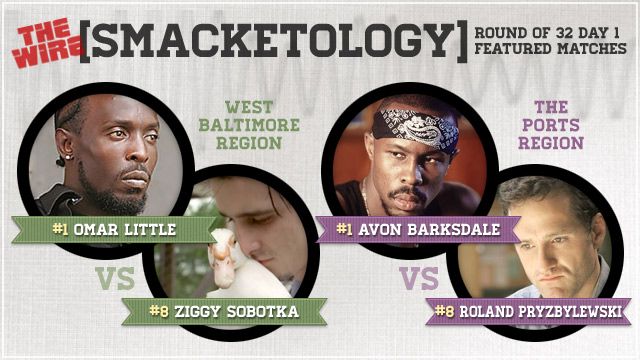
Bracketology: The Quest to Determine the Greatest Character on The Wire

The Wire is one of my all-time favorite TV shows (together with LOST and Breaking Bad). So it was with great pleasure to learn of the show’s revival in a new contest held by Grantland to determine the show’s greatest character:

This gave us an idea. What if we actually did subject the key players of the Wire-verse to rigorous bracketological inquiry? If we played corner boys against dock workers, murder-polices against hoppers, and craven politicos against enigmatic not-actually-Greek human traffickers, in matchups as arbitrary and occasionally unjust as life and death on the mean streets of West Baltimore, would the king stay the king?

This week, we’re going to find out. And we’re probably also going to make David Simon mad, again. Behold: Grantland’s first-ever TV bracket. Thirty-two characters. Six days…

Grantland's March contest to determine the greatest character on The Wire.

The voting is done on Grantland’s Facebook page. I’ve cast my votes for today. Who’s in my final four, you ask? Omar Little, Jimmy McNulty, Avon Barksdale, and Stringer Bell. Jimmy McNulty vs. Stringer Bell in the finals. McNulty wins it all. What does your bracket look like?

Watson Gets a Job on Wall Street

After winning Jeopardy! against Ken Jennings and Brad Rutter last year, IBM’s Watson is on to bigger and better things. Bloomberg reports that Watson is now set to work on Wall Street:

IBM expects to generate billions in new revenue by 2015 by putting Watson to work. The technology giant has already sold Watson to health-care clients, helping WellPoint Inc. (WLP)and Seton Health Family analyze data to improve care. IBM executives say Watson’s skills — understanding and processing natural language, consulting vast volumes of unstructured information, and accurately answering questions with humanlike cognition — are also well suited for the finance industry.

Financial services is the “next big one for us,” said Manoj Saxena, the man responsible for finding Watson work. IBM is confident that with a little training, the quiz-show star that can read and understand 200 million pages in three seconds can make money for IBM by helping financial firms identify risks, rewards and customer wants mere human experts may overlook.

Banks spent about $400 billion on information technology last year, said Michael Versace, head of risk research at International Data Corp.’s Financial Insights, which has done research for IBM.

I am not sure if this is entirely good news…

On Reading Privacy Policies

Why don’t you ever read the privacy policies associated with your browser, apps, and new software? Alexis Madrigal digs in:

One simple answer to our privacy problems would be if everyone became maximally informed about how much data was being kept and sold about them. Logically, to do so, you’d have to read all the privacy policies on the websites you visit. A few years ago, two researchers, both then at Carnegie Mellon, decided to calculate how much time it would take to actually read every privacy policy you should. 

First, Lorrie Faith Cranor and Aleecia McDonald needed a solid estimate for the average length of a privacy policy. The median length of a privacy policy from the top 75 websites turned out to be 2,514 words. A standard reading rate in the academic literature is about 250 words a minute, so each and every privacy policy costs each person 10 minutes to read.

Next, they had to figure out how many websites, each of which has a different privacy policy, the average American visits. Surprisingly, there was no really good estimate, but working from several sources including their own monthly tallies and other survey research, they came up with a range of between 1,354 and 1,518 with their best estimate sitting at 1,462. 

So, each and every Internet user, were they to read every privacy policy on every website they visit would spend 25 days out of the year just reading privacy policies! If it was your job to read privacy policies for 8 hours per day, it would take you 76 work days to complete the task. Nationalized, that’s 53.8 BILLION HOURS of time required to read privacy policies.

Alexis concludes: “The collective weight of the web’s data collection practices is so great that no one can maintain a responsible relationship with his or her own data.”

I couldn’t agree more. No wonder no one is reading those darn things.

Susan Cain: The Power of Introverts

Susan Cain is the author of Quiet: The Power of Introverts in a World That Can’t Stop Talking. In her excellent TED talk featured below, she explains how society should embrace introverts. She explains how our schools and businesses were designed for extroverts, but there is a way to make introverts feel more included. She spent seven years working on her book, and spent the better half of last year working on her speech:

[youtube http://www.youtube.com/watch?v=3yyeJ1jaGDU h=400 w=600]

As an introvert myself, I found the talk inspiring.

Montblanc Film Contest: The Beauty of a Second

Almost two hundred years ago, Nicolas Rieussec recorded time to an accuracy of a fifth second for the first time, and the chronograph was born. To celebrate this unique invention, Montblanc announced a one-of-a-kind “The Beauty of a Second” short-film contest presented by the famous film director Wim Wenders:

[vimeo https://vimeo.com/31604545 h=400 w=600]

Since then, there have been three iterations of the contest, with the winning entries shown below. All of them are beautiful and inspiring. How much can you tell in one second? A lot.

[vimeo https://vimeo.com/32071937 h=400 w=600]


[vimeo https://vimeo.com/33978304 h=400 w=600]


[vimeo https://vimeo.com/36897783 h=400 w=600]


What would your one second story be?