A School for Quants

This is an interesting piece in The Financial Times about a “school for quants” (at the University College London). There is a general profile of the quant business, and then the articles profiles a few students working at the center and what they’re doing with their skills (not all of it is finance related):

The Financial Computing Centre at UCL, a collaboration with the London School of Economics, the London Business School and 20 leading financial institutions, claims to be the only institute of its kind in Europe. Each year since its establishment in late 2008, between 600 and 800 students have applied for its 12 fully funded PhD places, which each cost the taxpayer £30,000 per year. Dozens more applicants come from the financial industry, where employers are willing to subsidise up to five years of research at the tantalising intersection of computers, data and money.

As of this winter, the centre had about 60 PhD students, of whom 80 per cent were men. Virtually all hailed from such forbiddingly numerate subjects as electrical engineering, computational statistics, pure mathematics and artificial intelligence. These realms of knowledge contain concepts such as data mining, non-linear dynamics and chaos theory that make many of us nervous just to see written down. Philip Treleaven, the centre’s director, is delighted by this. “Bright buggers,” he calls his students. “They want to do great things.”

In one sense, the centre is the logical culmination of a relationship between the financial industry and the natural sciences that has been deepening for the past 40 years. The first postgraduate scientists began to crop up on trading floors in the early 1970s, when rising interest rates transformed the previously staid calculations of bond trading into a field of complex mathematics. 

An example of how Ilya Zheludev, one of the students profiled, is applying his skills:

Ilya Zheludev, one of the students from the meeting, showed me his study of 500,000 internal Enron emails, which were released following the collapse of the energy company in 2001. Zheludev’s sentiment analysis showed a spike in emotion among employees – both positive and negative, a massive, contradictory shiver – in April 1999, a few months before the company’s stock began to take off on its exponential (and fraudulent) trajectory.

Picking up on such bubbles of emotion as they emerge (around a company, for instance, or a government) even in such murky waters as Twitter, or Facebook, or the website of the Financial Times, has an obvious allure to individual investors trying to stay ahead of the market. At least one London-based hedge fund, Derwent Capital, now trades purely on social data, mined in this way.

Read more here.

###

(Hat tip: Paul Kedrosky)
The Pirate Certificate at MIT

This is the most amusing news I’ve read all day. Apparently, MIT awards Pirate certificates (and has been doing so for a number of years).

Any student who passes courses in pistol, archery, sailing and fencing are considered a pirate, according to the MIT Department of Athletics, Physical Education & Recreation, who began issuing official certificates last fall.

So far, six students have reached elite pirate status, receiving pieces of faux parchment authorized by the “swashbucklin’” MIT, certifying that the named “salty dog” is entitled to a Pirate Certificate “with all its privileges and obligations thereof.”

Read more at The Boston Globe.

Bracketology: The Quest to Determine the Greatest Character on The Wire

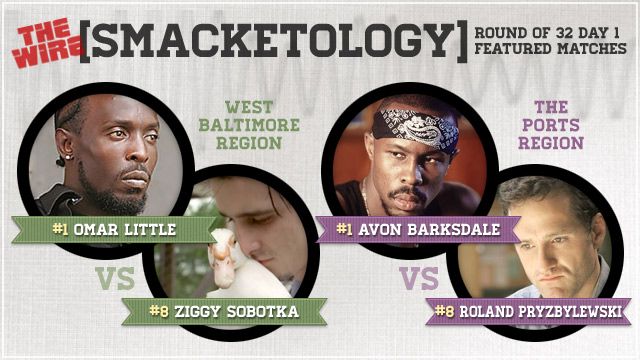
The Wire is one of my all-time favorite TV shows (together with LOST and Breaking Bad). So it was with great pleasure to learn of the show’s revival in a new contest held by Grantland to determine the show’s greatest character:

This gave us an idea. What if we actually did subject the key players of the Wire-verse to rigorous bracketological inquiry? If we played corner boys against dock workers, murder-polices against hoppers, and craven politicos against enigmatic not-actually-Greek human traffickers, in matchups as arbitrary and occasionally unjust as life and death on the mean streets of West Baltimore, would the king stay the king?

This week, we’re going to find out. And we’re probably also going to make David Simon mad, again. Behold: Grantland’s first-ever TV bracket. Thirty-two characters. Six days…

Grantland's March contest to determine the greatest character on The Wire.

The voting is done on Grantland’s Facebook page. I’ve cast my votes for today. Who’s in my final four, you ask? Omar Little, Jimmy McNulty, Avon Barksdale, and Stringer Bell. Jimmy McNulty vs. Stringer Bell in the finals. McNulty wins it all. What does your bracket look like?

Watson Gets a Job on Wall Street

After winning Jeopardy! against Ken Jennings and Brad Rutter last year, IBM’s Watson is on to bigger and better things. Bloomberg reports that Watson is now set to work on Wall Street:

IBM expects to generate billions in new revenue by 2015 by putting Watson to work. The technology giant has already sold Watson to health-care clients, helping WellPoint Inc. (WLP)and Seton Health Family analyze data to improve care. IBM executives say Watson’s skills — understanding and processing natural language, consulting vast volumes of unstructured information, and accurately answering questions with humanlike cognition — are also well suited for the finance industry.

Financial services is the “next big one for us,” said Manoj Saxena, the man responsible for finding Watson work. IBM is confident that with a little training, the quiz-show star that can read and understand 200 million pages in three seconds can make money for IBM by helping financial firms identify risks, rewards and customer wants mere human experts may overlook.

Banks spent about $400 billion on information technology last year, said Michael Versace, head of risk research at International Data Corp.’s Financial Insights, which has done research for IBM.

I am not sure if this is entirely good news…

On Reading Privacy Policies

Why don’t you ever read the privacy policies associated with your browser, apps, and new software? Alexis Madrigal digs in:

One simple answer to our privacy problems would be if everyone became maximally informed about how much data was being kept and sold about them. Logically, to do so, you’d have to read all the privacy policies on the websites you visit. A few years ago, two researchers, both then at Carnegie Mellon, decided to calculate how much time it would take to actually read every privacy policy you should. 

First, Lorrie Faith Cranor and Aleecia McDonald needed a solid estimate for the average length of a privacy policy. The median length of a privacy policy from the top 75 websites turned out to be 2,514 words. A standard reading rate in the academic literature is about 250 words a minute, so each and every privacy policy costs each person 10 minutes to read.

Next, they had to figure out how many websites, each of which has a different privacy policy, the average American visits. Surprisingly, there was no really good estimate, but working from several sources including their own monthly tallies and other survey research, they came up with a range of between 1,354 and 1,518 with their best estimate sitting at 1,462. 

So, each and every Internet user, were they to read every privacy policy on every website they visit would spend 25 days out of the year just reading privacy policies! If it was your job to read privacy policies for 8 hours per day, it would take you 76 work days to complete the task. Nationalized, that’s 53.8 BILLION HOURS of time required to read privacy policies.

Alexis concludes: “The collective weight of the web’s data collection practices is so great that no one can maintain a responsible relationship with his or her own data.”

I couldn’t agree more. No wonder no one is reading those darn things.

Montblanc Film Contest: The Beauty of a Second

Almost two hundred years ago, Nicolas Rieussec recorded time to an accuracy of a fifth second for the first time, and the chronograph was born. To celebrate this unique invention, Montblanc announced a one-of-a-kind “The Beauty of a Second” short-film contest presented by the famous film director Wim Wenders:

[vimeo https://vimeo.com/31604545 h=400 w=600]

Since then, there have been three iterations of the contest, with the winning entries shown below. All of them are beautiful and inspiring. How much can you tell in one second? A lot.

[vimeo https://vimeo.com/32071937 h=400 w=600]


[vimeo https://vimeo.com/33978304 h=400 w=600]


[vimeo https://vimeo.com/36897783 h=400 w=600]


What would your one second story be?

Confessions of a “Bad” Teacher

William Johnson is a teacher at a public high school in Brooklyn who writes on education for the Web site Gotham Schools. In this Sunday’s op-ed in The New York Times, he explains how he’s been labeled a “bad” teacher at one school, took his teaching tactics to another school, and was seen as doing a good job there. The best part of the piece was his stance on teachers’ motivations and desire to improve:

The truth is, teachers don’t need elected officials to motivate us. If our students are not learning, they let us know. They put their heads down or they pass notes. They raise their hands and ask for clarification. Sometimes, they just stare at us like zombies. Few things are more excruciating for a teacher than leading a class that’s not learning. Good administrators use the evaluation processes to support teachers and help them avoid those painful classroom moments — not to weed out the teachers who don’t produce good test scores or adhere to their pedagogical beliefs.

Worst of all, the more intense the pressure gets, the worse we teach. When I had administrators breathing down my neck, the students became a secondary concern. I simply did whatever my assistant principal asked me to do, even when I thought his ideas were crazy. In all honesty, my teaching probably became close to incoherent. One week, my assistant principal wanted me to focus on arranging the students’ desks to fit with class activities, so I moved the desks around every day, just to show that I was a good soldier. I was scared of losing my job, and my students suffered for it.

That said, given all the support in the world, even the best teacher can’t force his students to learn. Students aren’t simply passive vessels, waiting to absorb information from their teachers and regurgitate it through high-stakes assessments. They make choices about what they will and won’t learn. I know I did. When I was a teenager, I often stayed up way too late, talking with friends, listening to music or playing video games. Did this affect my performance on tests? Undoubtedly. Were my teachers responsible for these choices? No.

Read more here.

Why Healthcare in America Is So Expensive

In his latest post for The Washington Post, Ezra Klein compares the cost of healthcare procedures in the United States to that in France, Britain, Canada, and India. The obvious answer why healthcare is so expensive in America is that the prices are higher.

On Friday, the International Federation of Health Plans — a global insurance trade association that includes more than 100 insurers in 25 countries — released more direct evidence. It surveyed its members on the prices paid for 23 medical services and products in different countries, asking after everything from a routine doctor’s visit to a dose of Lipitor to coronary bypass surgery. And in 22 of 23 cases, Americans are paying higher prices than residents of other developed countries. Usually, we’re paying quite a bit more. The exception is cataract surgery, which appears to be costlier in Switzerland, though cheaper everywhere else.

Prices don’t explain all of the difference between America and other countries. But they do explain a big chunk of it. The question, of course, is why Americans pay such high prices — and why we haven’t done anything about it.

“Other countries negotiate very aggressively with the providers and set rates that are much lower than we do,” Anderson says. They do this in one of two ways. In countries such as Canada and Britain, prices are set by the government. In others, such as Germany and Japan, they’re set by providers and insurers sitting in a room and coming to an agreement, with the government stepping in to set prices if they fail.

In America, Medicare and Medicaid negotiate prices on behalf of their tens of millions of members and, not coincidentally, purchase care at a substantial markdown from the commercial average. But outside that, it’s a free-for-all. Providers largely charge what they can get away with, often offering different prices to different insurers, and an even higher price to the uninsured.

Some specific examples:

In 2009, Americans spent $7,960 per person on health care. Our neighbors in Canada spent $4,808. The Germans spent $4,218. The French, $3,978. If we had the per-person costs of any of those countries, America’s deficits would vanish. Workers would have much more money in their pockets. Our economy would grow more quickly, as our exports would be more competitive.

There is a quote from Tom Sackville, who served in Margaret Thatcher’s administration. He explains that in America, healthcare is much more of a routine business (“very much something people make money out of” than anywhere else, where there may be embarrassment at making so much money from patients.

Something Klein neglects to mention but is picked up in the comments by a user named “blert” is how Americans subsidize the cost of medicine for everyone else by investing so much money in research and development:

[S]ome of the development of MRI technology happened in Britain. Most was performed in the U.S. Who is paying for the cost of development of this and other new technology and drugs? It’s often not the people in places like Canada and France, where government controls hold down prices. Most of the cost of research and development is paid for by Americans. We pay perhaps five times more in the U.S. for some procedures than people in France pay, but the technology might not exist in the first place if we didn’t pay this disproportionate share. Once the technology exists, companies keep charging as much as they can in the U.S. to recoup costs and to fund development of the next big thing in medicine, and meanwhile other countries in the world adopt the technology, gaining benefits from it without actually paying the costs. This is Canada, France, and much of Europe. Plenty of medical research goes on in these countries, but American consumers ultimately bear most of the cost. It’s an unfair system in many respects, but it’s what has kept medical research moving ahead for the last several decades.

Healthcare is such a complex topic that I realize that nothing I (or Klein) can write in the blog post can begin to fully explain the difference in healthcare costs in America vs. that of Europe. But hopefully the quotes I provided are food for thought.

Ridley Scott Directs a TED Talk from 2023

[youtube http://www.youtube.com/watch?v=S7YK2uKxil8 h=400 w=600]

A TED talk from the future, as envisioned by Ridley Scott. Peter Weyland gives a masterful performance in front of thousands, in what may be a viral promotion for Prometheus

Peter Weyland has been a magnet for controversy since he announced his intent to build the first convincingly humanoid robotic system by the end of the decade.

Whether challenging the ethical boundaries of medicine with nanotechnology or going toe to toe with the Vatican itself on the issue of gene-therapy sterilization, Sir Peter prides himself on his motto, “If we can, we must.” After a three year media blackout, Weyland has finally emerged to reveal where he’s heading next. Wherever that may be, we will most certainly want to follow.


Ryan Gosling is Everywhere

Because it’s Friday, why not? Here are some Tumblr blogs out there showcasing the polymath that Ryan Gosling is:

They make for some hilarious viewing/reading. Which one is your favorite?