On the Origin of the Tournament Bracket

March Madness begins today. And that means everyone is scrambling to finish their brackets. Well, almost. An estimated 45 percent of Americans fill out the brackets with their predictions of the results each year, and Barack Obama has referred to the practice as “a national pastime.”

But what about the history of the bracket? Where does its origin lie? According to this piece in The Wall Street Journal, the bracket isn’t a modern invention and may have originated with the Greeks:

Steven Murray, a Colorado Mesa University professor who has studied the history of sports, said the concept that inspired the bracket—a single-elimination sporting competition with many rounds—isn’t a modern invention. He said the ancient Greeks held wrestling and boxing competitions starting around 700 B.C. where the combatants would draw lots to set pairings.

If the tournament pairings were posted in a bracket form, Murray said, they probably would have been painted with pigment on scrolls, placards or walls and wouldn’t have survived.

But perhaps the modern bracket had its origins with a more familiar concept, the family tree:

Several historians, when confronted with the question, speculated that the basketball bracket could have its roots in another organizational art form: the family tree. Brenton Simons, president and chief executive of the New England Historic Genealogical Society, said renderings of family trees date at least to the 18th century in the U.S. and stretch back centuries before in other countries.

Most likely, the modern rendition of the sports bracket can be traced to England with the Lawn Tennis Championship at Wimbledon.

So basically, the origin of the bracket is still a mystery. Click here to view a slideshow accompanying the article showcasing various brackets throughout history. For more info on the history of the bracket, see this explainer in Slate.

The Man Who Broke Atlantic City

Don Johnson won almost $6 million playing blackjack in one night, single-handedly obliterating the monthly revenue of Atlantic City’s Tropicana casino. Not long before that, he’d taken the Borgata for $5 million and Caesars for $4 million. But Don Johnson isn’t a card counter. So how did he do it?

Turns out, he is one of those sophisticated (high roller) gamblers who can negotiate with casinos, as explained in this story in The Atlantic:

Sophisticated gamblers won’t play by the standard rules. They negotiate. Because the casino values high rollers more than the average customer, it is willing to lessen its edge for them. It does this primarily by offering discounts, or “loss rebates.” When a casino offers a discount of, say, 10 percent, that means if the player loses $100,000 at the blackjack table, he has to pay only $90,000. Beyond the usual high-roller perks, the casino might also sweeten the deal by staking the player a significant amount up front, offering thousands of dollars in free chips, just to get the ball rolling. But even in that scenario, Johnson won’t play. By his reckoning, a few thousand in free chips plus a standard 10 percent discount just means that the casino is going to end up with slightly less of the player’s money after a few hours of play. The player still loses.

But two years ago, Johnson says, the casinos started getting desperate. With their table-game revenues tanking and the number of whales diminishing, casino marketers began to compete more aggressively for the big spenders. After all, one high roller who has a bad night can determine whether a casino’s table games finish a month in the red or in the black. Inside the casinos, this heightened the natural tension between the marketers, who are always pushing to sweeten the discounts, and the gaming managers, who want to maximize the house’s statistical edge. But month after month of declining revenues strengthened the marketers’ position. By late 2010, the discounts at some of the strapped Atlantic City casinos began creeping upward, as high as 20 percent.

The house has advantage, over long term, with typical gamblers who wager from a few to a few hundred dollars per hand. But when you have elite status and can negotiate with casinos to give you discounts on losses, you can turn the odds in your favor. And that’s what Don Johnson did…

Last question: is Don Johnson the most famous blackjack player in the world? That’s what the article attests.

Encyclopaedia Britannica, Printed No More

After 244 years of existence, Encyclopaedia Brittanica is ceasing its printed publication:

The Britannica, the oldest continuously published encyclopedia in the English language, has become a luxury item with a $1,395 price tag. It is frequently bought by embassies, libraries and research institutions, and by well-educated, upscale consumers who felt an attachment to the set of bound volumes. Only 8,000 sets of the 2010 edition have been sold, and the remaining 4,000 have been stored in a warehouse until they are bought.

The 2010 edition had more than 4,000 contributors, including Arnold Palmer (who wrote the entry on the Masters tournament) and Panthea Reid, professor emeritus at Louisiana State University and author of the biography “Art and Affection: A Life of Virginia Woolf” (who wrote about Virginia Woolf).

All hail Wikipedia! Although this was a shocking statistic:

About half a million households pay a $70 annual fee for the online subscription, which includes access to the full database of articles, videos, original documents and to the company’s mobile applications

Don’t these people know they can get better and more accurate information from Wikipedia?

###

(via Daring Fireball

Jonathan Ive on Design

Jonathan Ive is Apple’s Apple’s Senior Vice President of Industrial Design. In Walter Isaacson’s biography of Steve Jobs, the late Apple co-founder explained that Ive has been left with unparalleled control at Apple to design products as he sees fit, with little to no guidance and reporting to management. In the latest issue of London’s Evening Standard, Ive was interviewed about design:

Q: What makes design different at Apple?

A: We struggle with the right words to describe the design process at  Apple, but it is very much about designing and prototyping and making. When you separate those, I think the final result suffers. If something is going to be better, it is new, and if it’s new you are confronting problems and challenges you don’t have references for. To solve and address those requires a remarkable focus. There’s a sense of being inquisitive and optimistic, and you don’t see those in combination very often.

Q: When did you first become aware of the importance of designers?

A: First time I was aware of this sense of the group of people who made something was when I first used a Mac – I’d gone through college in the 80s using a computer and had a horrid experience. Then I discovered the mac, it was such a dramatic moment and I remember it so clearly – there was a real sense of the people who made it.

Q: How do you know you’ve succeeded?

A :It’s a very strange thing for a designer to say, but one of the things that really irritates me in products is when I’m aware of designers wagging their tails in my face.

Our goal is simple objects, objects that you can’t imagine any other way. Simplicity is not the absence of clutter. Get it right, and you become closer and more focused on the object. For instance, the iPhoto app we created for the new iPad, it completely consumes you and you forget you are using an iPad.

Q: What are the biggest challenges in constantly innovating?

A: For as long as we’ve been doing this, I am still surprised how difficult it is to do this, but you know exactly when you’re there – it can be the smallest shift, and suddenly transforms the object, without any contrivance.

Some of the problem solving in the iPad is really quite remarkable, there is this danger you want to communicate this to people. I think that is a fantastic irony, how oblivious people are to the acrobatics we’ve performed to solve a problem – but that’s our job, and I think people know there is tremendous care behind the finished product.

If you come away thinking that Ive’s responses are a bit (or a lot) shallow, you aren’t alone. This sentence says it all for me: “We struggle with the right words to describe the design process at Apple.”

On Book Scouting

This is a nice story in The New Yorker about Wayne Pernu, a book scout. His day consists of scouring ads and going out to buy used books, and then selling them. He scouts almost every day.

Though his competitors in the book-scout field rely on bar-code scanners to determine the value of titles, Pernu can tell within a few seconds of taking a book into his hands whether it’s worth anything. “A lot of times I have no idea what I’m buying, but I do know that I should buy it,” he says. His intuition has served him well. Over the years, he has unearthed from piles of unwanted books a signed, first-edition copy of Ayn Rand’s “Atlas Shrugged” (worth two thousand dollars) and two signed, limited-edition, slip-cased copies of Dwight D. Eisenhower’s “Crusade in Europe” (worth between three and five thousand dollars each). And when a scanner-dependent Honduran gang established an aggressive book-buying operation at his favorite thrift-store haunt a few years ago, he survived because the machines know nothing about books published prior to 1972. “I can’t tell you the gorgeous, beautiful books that they just throw back, like an eighteenth-century science book with colored plates of butterflies and bumblebees,” he says. “They’ll throw back thousand-dollar books because they can’t look them up.”

Pernu learned the book trade from the other side of the buying table. In 1989, when he moved to Oregon, he worked a few years as a buyer at Powell’s Books before striking out on his own. He continues to work almost exclusively with the Portland-based book shop, although he could earn much more selling on eBay and Amazon. Pernu says he’d rather spend his time hunting for books than entering data and going to the post office. He’s currently one of the store’s chief independent scouts, turning over between two and three thousand titles per month, about ninety per cent of the books he offers. Other scouts resell about fifty per cent of their stock. According to Powell’s’ used-book buying-table manager, Jay Wheeler, professional scouts like Pernu, who receive up to thirty per cent of books’ resale value, account for less than five per cent of the buying table’s purchases. “There was a time, years ago, when we had so many scouts we couldn’t keep track of them,” Wheeler says. But now there are fewer than twenty.

It’s always refreshing to read about careers that are still thriving, even if they are considered “a dying breed” by the public at large.

###

(hat tip: Andrew Sullivan)

The Culture that is Switzerland

From the BBC, a brief report on how the Swiss voted on the recent referendum:

Two-thirds of voters reportedly rejected an increase in the country’s minimum annual leave from four weeks to six, which would have brought it in line with most other West European countries.

But a proposal to construct what have locally been referred to as “sex boxes” for prostitutes got the green light from voters in Zurich.

The plan would see the creation of special parking spaces with walls between them where sex workers can ply their trade away from suburban areas in Switzerland’s biggest city.

Residents in Geneva, meanwhile, voted for tighter restrictions on unauthorised demonstrations and tougher fines for violators.

You’ve gotta love the Swiss!

How to Become Creative

In the Saturday essay in The Wall Street Journal, Jonah Lehrer writes about the creative process. He argues that creativity is not something that is passed in the genes; it is something that requires practice. We can work to become more creative.

This ability to calculate progress is an important part of the creative process. When we don’t feel that we’re getting closer to the answer—we’ve hit the wall, so to speak—we probably need an insight. If there is no feeling of knowing, the most productive thing we can do is forget about work for a while. But when those feelings of knowing are telling us that we’re getting close, we need to keep on struggling.

Of course, both moment-of-insight problems and nose-to-the-grindstone problems assume that we have the answers to the creative problems we’re trying to solve somewhere in our heads. They’re both just a matter of getting those answers out. Another kind of creative problem, though, is when you don’t have the right kind of raw material kicking around in your head. If you’re trying to be more creative, one of the most important things you can do is increase the volume and diversity of the information to which you are exposed.

Steve Jobs famously declared that “creativity is just connecting things.” Although we think of inventors as dreaming up breakthroughs out of thin air, Mr. Jobs was pointing out that even the most far-fetched concepts are usually just new combinations of stuff that already exists. Under Mr. Jobs’s leadership, for instance, Apple didn’t invent MP3 players or tablet computers—the company just made them better, adding design features that were new to the product category.

And it isn’t just Apple. The history of innovation bears out Mr. Jobs’s theory. The Wright Brothers transferred their background as bicycle manufacturers to the invention of the airplane; their first flying craft was, in many respects, just a bicycle with wings. Johannes Gutenberg transformed his knowledge of wine presses into a printing machine capable of mass-producing words. Or look at Google: Larry Page and Sergey Brin came up with their famous search algorithm by applying the ranking method used for academic articles (more citations equals more influence) to the sprawl of the Internet.

Don’t miss the bottom of the post which provides ten ways to become more creative, which I summarize below. A lot of these have been tested in an artificial setting (think undergraduates in a lab), so take these with a grain of salt:

1. Surround yourself with the color blue.

2. Do creative things when you’re groggy.

3. Daydream more.

4. Think like a child — imagine what you would do as a five year old.

5. Laugh more.

6. Imagine that you are far away.

7. Keep it generic.  When the verbs are extremely specific, people think in narrow terms. In contrast, the use of more generic verbs—say, “moving” instead of “driving” can help us solve creative problems.

8. Don’t work in a cubicle!

9. See the world. Travel.

10. Move from a small city to a metropolis.

On Word Choice

This is a great post on word choice in writing:

1. A Series of Word Choices

Here’s why this matters: because both writing and storytelling comprise, at the most basic level, a series of word choices. Words are the building blocks of what we do. They are the atoms of our elements. They are the eggs in our omelets. They are the shots of liquor in our cocktails. Get it right? Serendipity. Get it wrong? The air turns to arsenic, that cocktail makes you puke, this omelet tastes like balls.

 2. Words Define Reality

Words are like LEGO bricks: the more we add, the more we define the reality of our playset. “The dog fucked the chicken” tells us something. “The Great Dane fucked the chicken” tells us more. “The Great Dane fucked the bucket of fried chicken on the roof of Old Man Dongweather’s barn, barking with every thrust” goes the distance and defines reality in a host of ways (most of them rather unpleasant). You can over-define. Too many words spoil the soup. Find the balance between clarity, elegance, and evocation.

 3. The “Hot and Cold” Game

You know that game — “Oh, you’re cold, colder, colder — oh! Now you’re getting hot! Hotter! Hotter still! Sizzling! Yay, you found the blueberry muffin I hid under the radiator two weeks ago!” –? Word choice is like a textual version of that game where you try to bring the reader closer to understanding the story you’re trying to tell. Strong, solid word choice allows us to strive for clarity (hotter) and avoid confusion (colder).

 4. Most with Fewest

Think of it like a different game, perhaps: you’re trying to say as much as possible with as few words as you can muster. Big ideas put as briefly as you are able. Maximum clarity with minimum words.

 5. The Myth of the Perfect Word

Finding the perfect word is as likely as finding a downy-soft unicorn with a pearlescent horn riding a skateboard made from the bones of your many enemies. Get shut of this notion. The perfect is the enemy of the good. For every sentence and every story you have a plethora of right words. Find a good word. Seek astrong word. But the hunt for a perfect word will drive you into a wide-eyed froth. Though, according to scholars, “nipplecookie” is in fact the perfect word. That’s why Chaucer used it so often. Truth.

Read the rest of this pithy, funny post (note advice #9 and #11). I like the conclusion:

Write to be read. Choose words that have flavor but do not overwhelm, that reach out instead of pushing back, that sound right to the ear and carry with them a kind of rhythm. Write with confidence, not with arrogance. Don’t be afraid to play with words. But be sure to let the reader play with you.

And after you’re done reading the post, and you’re serious about improving your craft (of writing), make sure to grab Stephen King’s classic On Writing. It’s the best book I’ve read filled with practical advice on how you can improve your writing.

On Successful People

Daniel Tenner, who muses on startups and entrepreneurship at swombat.com, has a great post reflecting on what makes successful people successful:

If you want to get wealthy, you have two approaches: count on a lottery ticket type of event (e.g. winning the lottery, or winning the startup lottery…), or set out building, growing and maintaining a base of wealth. Ignoring those who choose the first path (because they are clearly irrational), if you look at the behaviours of people who tend to go from little wealth to a lot more wealth, you can observe that they tend to make decisions that optimise how much money they make (this sounds obvious, but is actually quite an insight).

They’ll work in jobs that pay more, or start businesses that make money. In my experience, those who have a fair bit of money are not profligate – they spend sensibly, agonise over larger expenses, are conscious of having to maintain and grow their savings, and so on. Whereas the average person will optimise for today’s enjoyment (and that may well be the right choice for many), those who are money-minded tend to optimise for accumulating more money and spending less money. All these decisions add up over the decades, and they also compound over each other. When you have £100k in the bank, you can make wealth-preserving decisions (e.g. buying some Apple stock a few years ago!) that will provide a much larger return than what you could do when you have just £10k or even £0.

Because of all this, the difference between someone who consistently makes decisions that preserve and augment weatlh, and those who don’t, can easily get to be very large.

With non-financial success, this process is much harder to observe, but I think it’s still a big factor. Decades of making successful decisions that add to whatever it is you want to do will pile up and compound and get you there. Waiting for that one big hit to get you to the stars, on the other hand, will not. Smaller successes build up your “success wealth”, in the form of experience, connections, wisdom, knowledge, skill, and so on.

Read the rest of the post to learn of Daniel’s thoughts on self-sacrifice and growth.

Redesigning the Cover of Vladimir Nabokov’s Lolita

In 2009, Venus febriculosa, a blog run by John Bertram, held a book cover competition, asking entrants to redesign Vladimir Nabokov’s classic novel Lolita. Now, Bertram is publishing an entire book of new covers for the novel, each contributed by a prominent designer. Bertram told Imprint that the idea for the contest came after stumbling across Nabokov scholar and translator Dieter E. Zimmer’s gallery of Lolita covers and realizing that they were, well, pretty bad. The contest was marginally successfully, and John Bertram adds:

I sought out well-known designers and artists who I thought would be able to embrace the challenge.

At the same time, I sensed that Nabokov scholars had their own important contributions to make toward such a study and envisioned a multidisciplinary project of images and texts that addressed what such a cover means. I was especially anxious that Lolita herself not get lost in the shuffle, so I sought advice and recommendations from Sheila Levrant de Bretteville, co-founder of the Woman’s Building in Los Angeles, and currently director of graduate studies in graphic design at the Yale School of Art. I am delighted that Sian Cook and Teal Triggs, co-founders of the Women’s Design + Research Unit, agreed to be involved as well as Ellen Pifer, whose essays about Lolita are constant reminders that at the heart of the novel is an innocent abused child. At one point I entertained the notion of only having contributions by women, but, as it is, nearly two-thirds of the covers and half of the essays are by women.

A selection of final designs are below:

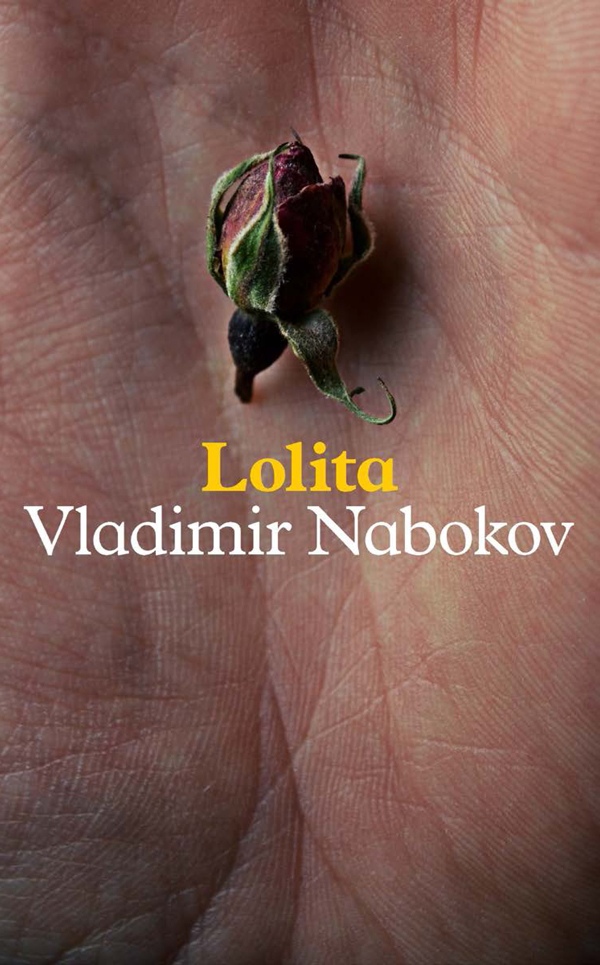
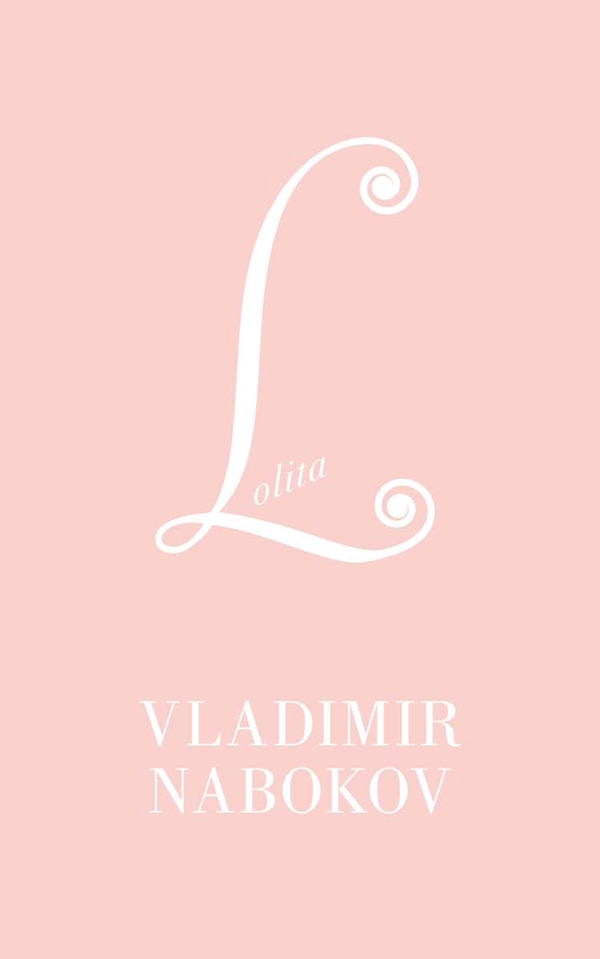
Lolita cover design by Ben Wiseman

Lolita cover design by Kelly Blair

Lolita cover design by Rachel Berger

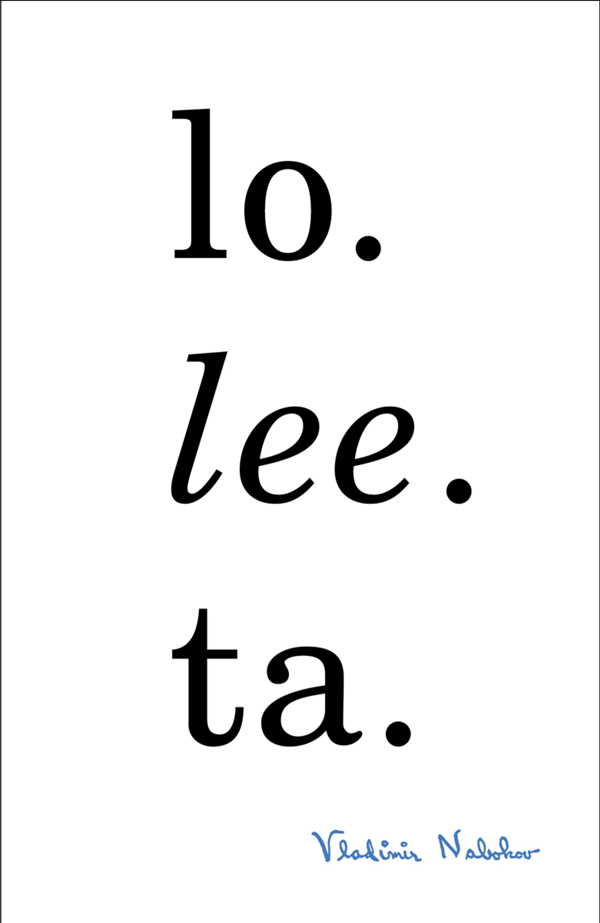
But my favorite design is the one below by Peter Mendesulnd. I think it evokes the “tip of the tongue” phenomenon that Nabokov wants the reader to feel as you read the first sentence (“Lolita, light of my life, fire of my loins. My sin, my soul. Lo-lee-ta: the tip of the tongue taking a trip of three steps down the palate to tap, at three, on the teeth. Lo. Lee. Ta.):

Lolita cover by Peter Mendelsund.

The version of Lolita that I own is this one (Megan Wilson for the Vintage edition), and I think it’s a great cover. But certainly, I’d love to see any of the designs featured above on my bookshelf.

###

If this topic fascinates you, then check out the following resources:

1) “Recovering Lolita” at Imprint Mag.

2) Jacket Mechanical’s two posts on book cover redesign of Lolita.

3) A Flickr set of more than 160 redesigns of the Lolita cover.