Snow Fall: The Avalanche at Tunnel Creek

The New York Times recently unveiled an interactive story titled “Snow Fall: The Avalanche at Tunnel Creek.” It’s an experiment, and is thus presented under the “projects” sub-URL of the Times. The story is about survival after an avalanche in the Cascade Mountains:

The Cascades are among the craggiest of American mountain ranges, roughly cut, as if carved with a chain saw. In summer, the gray peaks are sprinkled with glaciers. In winter, they are smothered in some of North America’s deepest snowpack.

The top of Cowboy Mountain, about 75 miles east of Seattle, rises to 5,853 feet — about half the height of the tallest Cascades, but higher than its nearest neighbors, enough to provide 360-degree views. It feels more like a long fin than a summit, a few feet wide in parts. Locals call it Cowboy Ridge.

To one side, down steep chutes, is Stevens Pass ski area, which receives about 400,000 visitors each winter. To the other, outside the ski area’s boundary to what is considered the back of Cowboy Mountain, is an unmonitored play area of reliably deep snow, a “powder stash,” known as Tunnel Creek.
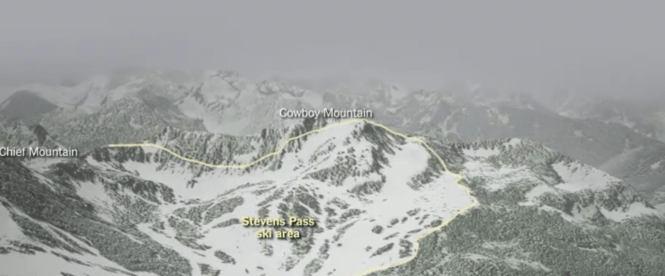
An interactive overview of the Cascades.

An interactive overview of the Cascades.

So far, only the first part of the story is available online. And it’s a delight. From the text, to the in-line photos and videos, this is a top-notch media experiment. I highly recommend clicking through and reading/partaking.

Update (12/21/12): The whole story is now online.

###

(hat tip: @KathrynSchulz)

Kevin Systrom on Instagram’s New Terms of Service

Following backlash from the Web concerning the new terms of service for Instagram, the co-founder of Instagram, Kevin Systrom, offers a classy, tempered response:

Advertising on Instagram From the start, Instagram was created to become a business. Advertising is one of many ways that Instagram can become a self-sustaining business, but not the only one. Our intention in updating the terms was to communicate that we’d like to experiment with innovative advertising that feels appropriate on Instagram. Instead it was interpreted by many that we were going to sell your photos to others without any compensation. This is not true and it is our mistake that this language is confusing. To be clear: it is not our intention to sell your photos. We are working on updated language in the terms to make sure this is clear.

To provide context, we envision a future where both users and brands alike may promote their photos & accounts to increase engagement and to build a more meaningful following. Let’s say a business wanted to promote their account to gain more followers and Instagram was able to feature them in some way. In order to help make a more relevant and useful promotion, it would be helpful to see which of the people you follow also follow this business. In this way, some of the data you produce — like the actions you take (eg, following the account) and your profile photo — might show up if you are following this business.

I am still wary of the connection to businesses that my photos may have, but at least I can rest assured that I own my photos and they won’t be sold without permission. For now, I am staying put with Instagram.

Paul Buchheit on “The Gift”

Paul Buchheit lost his younger brother when Paul was 27 years old. He married and his wife gave birth to a premature baby. In this must-read blog post, “The Gift,” he writes about how he coped with tragedy and the notion of unconditional love: 

In every tragedy, there is a gift, if we are able to see and accept it. From my brother, I received a personal understanding of death, and a constant reminder to live my life as though it may end at any moment. From my daughter, I learned what it means to love unconditionally, without expecting anything in return, a true gift.
 
These gifts were delivered at great cost, but still I often struggle to retain them. Life gets busy, and I forget what matters. But the reminders are all around us, if only we can open our eyes.
 
I’ve also wished for a way to share them with others, especially those who are facing their own disasters. In difficult situations such as these, people often turn to God. And even those who don’t believe, can understand God as the personification of all that is Good. When our lives are smashed to bits, and it feels like the ground has disappeared from under us, we look for guidance, for our North Star, for a God that can provide meaning and direction to what remains of our life.
I encourage you to read the whole post.

On Burning Out on the Web

A good piece in The New York Times on Brian Lam, writer for Wired and Gizmodo who called it quits and founded something less stressful:

Brian Lam was both a prince and a casualty of that realm. After interning at Wired, he became the editor of Gizmodo,Gawker Media’s gadget blog. A trained Thai boxer, he focused his aggression on cranking out enough copy to increase the site’s traffic, to a peak of 180 million page views from 13 million in the five years he was there.

He and his writers broke news, sent shrapnel into many subject areas with provocative, opinionated copy and was part of the notorious pilfered iPhone 4 story that had law enforcement officials breaking down doors on Apple’s behalf. I saw Mr. Lam on occasional trips to San Francisco, and he crackled with jumpy digital energy.

And then, he burned out at age 34. He loved the ocean, but his frantic digital existence meant his surfboard was gathering cobwebs. “I came to hate the Web, hated chasing the next post or rewriting other people’s posts just for the traffic,” he told me. “People shouldn’t live like robots.”

So he quit Gizmodo, and though he had several lucrative offers, he decided to do exactly nothing. He sold his car, rented out his house, took time to mull things over and eventually moved to Hawaii because he loves surfing.


The Hum that Helps Hunt Crime

From BBC News, an interesting piece on how forensic scientists are using a digital hum to authenticate audio recordings:

Any digital recording made anywhere near an electrical power source, be it plug socket, light or pylon, will pick up this noise and it will be embedded throughout the audio.

This buzz is an annoyance for sound engineers trying to make the highest quality recordings. But for forensic experts, it has turned out to be an invaluable tool in the fight against crime.

While the frequency of the electricity supplied by the national grid is about 50Hz, if you look at it over time, you can see minute fluctuations.

The process is known as Electric Network Frequency analysis. How this research came to be:

A decade ago, a Romanian audio specialist Dr Catalan Grigoras, now director of the National Center for Media Forensics at the University of Colorado, Denver, made a discovery: that the pattern of these random changes in frequency is unique over time.

By itself, this might be an interesting electrical curiosity. But when you take into account that most digital recordings are also embedded with this hum, it becomes a game changer.

Comparing the unique pattern of the frequencies on an audio recording with a database that has been logging these changes for 24 hours a day, 365 days a year provides a digital watermark: a date and time stamp on the recording.
It’s less clear if this technique can be used in parts of the world with multiple grids (as opposed to the U.K., which has one grid).

A Hunger for Tales of Life in the American Cul-de-Sac

The New York Times profiles Nikolai V. Zlobin’s book on American culture. Zlobin is spot-on about many things in American culture:

On Russians raising their children:

In Russia, children are raised by their grandmothers, or, if their grandmothers are not available, by women of the same generation in a similar state of unremitting vigilance against the hazards — like weather — that arise in everyday life. An average Russian mother would no sooner entrust her children’s upbringing to a local teenager than to a pack of wild dogs.

Some general scrutiny:

Mr. Zlobin scrutinizes the American practice of interrogating complete strangers about the details of their pregnancies; their weird habit of leaving their curtains open at night, when a Russian would immediately seal himself off from the prying eyes of his neighbors. Why Americans do not lie, for the most part. Why they cannot drink hard liquor. Why they love laws but disdain their leaders.

Interesting bit:

Mr. Zlobin, who has lived in St. Louis, Chapel Hill, N.C., and Washington, finds his answers in middle-class neighborhoods that most Europeans never see. Readers have peppered him with questions about his chapter about life on a cul-de-sac. Most Russians grew up in dense housing blocks, where children ran wild in closed central courtyards. Cul-de-sac translates in Russian as tupik — a word that evokes vulnerability and danger, a dead end with no escape.

But this isn’t exactly correct: there are neighborhoods with true dead ends (they usually have a yellow sign as a warning). This is the literal tupik, not the cul-de-sac. There is no Russian equivalent to the word cul-de-sac, so I disagree with this translation.

Not a boring read.

The Danger of a Single Story

This is a wonderful post from The Squeaky Robot about the danger of single narratives:

Such is the danger of the single story. A single story, as eloquently illustrated by novelist Chimamanda Adichie, pigeonholes the world to the scope of one individual. It’s a narrative that compresses a diverse group into one single stereotype, one plot with no room for subplots or alternate story lines: Africans are poor, starving, and wholly isolated from everything “Western” (Adichie mentions how her American roommate was surprised to hear that there were Britney Spears fans in Nigeria), Middle Easterners are violent Muslims, and the Swiss are wealthy pacifists.  These are the stories we repetitively hear. As such, the way we perceive the world becomes inaccurate and oversimplified. This has serious real-world implications that present physical threats to our well being, like invasive TSA screenings,Russian skinheads targeting anyone who looks foreign, and unjust racial profiling in major cities. Just as venomous is the abstract, spiritual harm. Single stories hijack possibilities of realistic images and expectations: while traveling through China, a girl asked me why all American girls are rich, beautiful, tall, and skinny. Little girls in Nepal, Argentina, Romania, Peru, Mongolia, and Spain had similar questions, all the while expressing a collective desire to be white, blonde, and blue-eyed.

These stories also present an existential danger. We become sheltered by a self-fashioned bubble of cognitive dissonance and ignorance, one that saves us from a world that is complex and difficult to understand but also endlessly diverse, forever intriguing, and unimaginably colorful. Adichie warns about the dangers of the single story: “All of these stories make me who I am. But to insist on only these negative stories is to flatten my experience and to overlook the many other stories that formed me. The single story creates stereotypes, and the problem with stereotypes is not that they are untrue, but that they are incomplete. They make one story become the only story.” As with any kind of story, incompleteness is unsavory. And yet we live, often obediently, by unfinished yet close-ended narratives.

A wise conclusion here:

Single stories are not real. Single stories do not allow gray areas in a world where black and white do not exist, either. Where does that leave us? It leaves us in a world where little girls wish they were American for no good reason. It leaves us in a world where kids have to think twice before they wear a hoodie down any urban street, and anyone wearing a turban is considered to be nursing explosives in their shoes.

I recommend reading the whole thing. I’ve now subscribed to the blog as well.

Silas House on Writing Every Waking Minute

Silas House teaches at Berea College and Spalding University’s M.F.A. program in creative writing. In this post, he offers the following advice to aspiring writers: “Write every waking minute.” By that, he means immerse yourself in thinking about your writing, your characters, your plot:

I live a few blocks from the campus where I teach. Every morning, I ride my bicycle to work. Along the way, I’m focusing on the cars speeding by me, seemingly intent on making the life of a bicyclist as miserable as possible. But I am also thinking about the main character in the novel I’m writing now.

The book is set in Key West, so naturally he rides his bicycle all over the Florida island. When pumping those pedals toward my office, I am not myself on an orange-leaf-strewed campus. I am my character, pedaling down to the beach after a long day of working as a hotel housekeeper. I see the world through his eyes. I imagine what he is thinking. I use that brief time to become him.

I transform the mundane task of grocery shopping into a writing exercise by studying my fellow shoppers through the eyes of my character, a man who is on the run from the law.

I eye each one with suspicion and dodge any cop who might be trotting along with a grocery basket in hand. I sometimes steal a quirk from a woman nearby to apply to one of my female characters in the book. I am multitasking, but there is stillness at work here.

This is excellent writing advice and I hope you read the whole thing.

Cofounder of Prismatic on Leaving Academia

Aria Haghighi, co-founder of the app Prismatic, discusses his decision to leave academia in this blog post. Aria holds a Ph.D. in Computer Science from UC Berkeley and a BS in Mathematics, and his area of focus was Natural Language Programming. It’s an interesting thought process:

At some point while at MIT, I decided to leave and do a startup because I felt my work as an academic wasn’t going to have the impact I wanted it to have. I went into academic CS in order to design NLP models which would become the basis of mainstream consumer products. I left because that path from research to product rarely works, and when it does it’s because a company is built with research at its core (think Google). This wasn’t a sudden realization, but one I had stewed on after observing academia and industry for years.

During grad school, I did a lot of consulting for ‘data startups’ (before ‘big data’ was a thing) and consistently ran into the same story: smart founders, usually not technical, have some idea that involves NLP or ML and they come to me to just ‘hammer out a model’ for them as a contractor. I would spend a few hours trying to get concrete about the problem they want to solve and then explain why the NLP they want is incredibly hard and charitably years away from being feasible; even then they’d need a team of good NLP people to make it happen, not me explaining ML to their engineers on the board a few hours a week. Useable fine-grained sentiment analysis is not going to be solved as a side project.

And his thoughts on making this tough decision:

Nearly two years later, after a lot of learning about industry and making real products, I can confidently say that I’m happy I left academia. Prismatic is a pretty tight realization of how I would’ve wanted NLP and ML to work in a startup and manifest in product. The relationship is symbiotic: the machine learning and technology is informing possibilities for the product, and conversely product needs are yielding interesting research. Various pieces of the machine learning (like the topics in a topic model) are first-class product elements. Many of the more ambitious NLP ideas I thought about during grad school will become first-class aspects of the product over the next few years.


Best Books of 2012 Chosen by CEOs, Policy Makers, Investors, and Economists

The end of the year lists continue.

Bloomberg asked a number of CEOs, policy makers, academics, investors, economists, and other financial types for their favorite books of 2012.

Among those contributing: CEOs James Gorman of Morgan Stanley, HSBC Holdings Plc’s Stuart Gulliver and Anshu Jain of Deutsche Bank AG. International Monetary Fund Managing Director Christine Lagarde made nominations as did former Federal Reserve Chairman Alan Greenspan and one-time U.S. Treasury secretaries Robert Rubin and Lawrence Summers. Nobel laureates Michael Spence and Edmund Phelps also sent submissions.

The most popular picks were:

See the entire list of recommendations here.