The Exclusive Lives of Dogs, NYC Edition

I enjoyed reading this piece in The New York Times about Ruff Club, a social place for dogs. Not every dog gets in, and the interview process can make the dog owners anxious.

Over-the-top dog spas are not all that new, of course. And the focus on exclusivity suggests the same competitive urges of urban parents obsessed with getting their toddlers into the right schools. And just as the nursery-school-age population in Manhattan has surged since 2000, particularly among wealthy white families, the pet population in New York City is now estimated at 1.1 million, according to the New York City Economic Development Corporation, with a 30 percent increase in the pet care industry from 2000 to 2010.

At any rate, it wouldn’t be the first time that dog care has been compared to child-rearing. “Treating your dog as a person can be a kind of aesthetic error, albeit one that’s becoming ever more common,” writes John Homans in “What’s a Dog For?” which explores the history and sociology of human-canine relationships.

The Ruff Club seizes upon this zeitgeist. “But we won’t infantilize dogs the way other spas do,” Ms. Simon Frost said. “We won’t give out report cards or talk in high-pitched voices.” She makes a point of calling her place “dog” day care not “doggy.” And unlike other high-end dog spas, the Ruff Club, which costs a competitive $29 for day boarding and $49 for overnight, doesn’t offer yoga, massage or any forms of coddling.

I think NYC is a prime spot for dog catering services like this to take off. What other cities have something similar to offer?

On an unrelated note, what kind of dog name is Zoloft? Depressing, no?
Quantum Gas Dips Below Absolute Zero

I’ve always been taught that it’s impossible for a system to drop in temperature below absolute zero, but I guess I’ve been taught wrong:

Wolfgang Ketterle, a physicist and Nobel laureate at the Massachusetts Institute of Technology in Cambridge, who has previously demonstrated negative absolute temperatures in a magnetic system, calls the latest work an “experimental tour de force”. Exotic high-energy states that are hard to generate in the laboratory at positive temperatures become stable at negative absolute temperatures — “as though you can stand a pyramid on its head and not worry about it toppling over,” he notes — and so such techniques can allow these states to be studied in detail. “This may be a way to create new forms of matter in the laboratory,” Ketterle adds.

If built, such systems would behave in strange ways, says Achim Rosch, a theoretical physicist at the University of Cologne in Germany, who proposed the technique used by Schneider and his team. For instance, Rosch and his colleagues have calculated that whereas clouds of atoms would normally be pulled downwards by gravity, if part of the cloud is at a negative absolute temperature, some atoms will move upwards, apparently defying gravity.

Another peculiarity of the sub-absolute-zero gas is that it mimics ‘dark energy’, the mysterious force that pushes the Universe to expand at an ever-faster rate against the inward pull of gravity. Schneider notes that the attractive atoms in the gas produced by the team also want to collapse inwards, but do not because the negative absolute temperature stabilises them. “It’s interesting that this weird feature pops up in the Universe and also in the lab,” he says. “This may be something that cosmologists should look at more closely.”

Fascinating.

A Reflection on Loving a Schizophrenic

This is a beautiful reflection by Kas Thomas on how he met and has fallen in love with a woman suffering from schizophrenia:

I stay with her not only because I understand her problems and want to be there for her, but because I’m totally taken by her (a polite way of saying I’m madly in love with her) and have been since the day we met. She’s truly a beautiful person inside and out. Guileless, straightforward, self-aware, good-hearted, open-minded, always truthful, always kind; the type of woman I’ve always wanted to meet and fall in love with. I could never say anything bad about her. (How could I? There’s nothing bad to say.) I could never do anything but love her, and want to take care of her. And I want what we have to last forever. 

I’ve told Sally many times, I never want to go on a first date ever again. I’ll never be interested in another woman. I’ll throw myself in front of a bus for her if she wants it. I’ll run naked through the streets if she says to. (I pray she never becomes that crazy, of course.) There isn’t anything I wouldn’t do for Sally.

Such courage to write so openly. Highly recommend reading in entirety.

Wright’s Law, and the Power of Love

Jeffrey Wright is a well-known teacher at Louisville Male Traditional High School in Louisville, Kentucky. He is known for his antics teaching physics, which include exploding pumpkins, fireballs, hovercraft, and a bed of nails with a sledgehammer.

But it is a simple lecture, one without props, that leaves the greatest impression on his students each year. The talk is about Mr. Wright’s son and the meaning of life, love, and family.

In the video below, Mr. Wright gives a lecture on his experiences as a parent of a child with special needs. His son, Adam (12 years old) has a rare disorder called Joubert syndrome, in which the part of the brain related to balance and movement fails to develop properly. Visually impaired and unable to control his movements, Adam breathes rapidly and doesn’t speak.  Find twelve minutes in your life and watch this film:


Perhaps the biggest testament of Mr. Wright’s message is that the film was created by a former student of Mr. Wright’s named Zack Conkle. Said Zack: “I wanted to show people this guy is crazy and really amazing.”

An incredible story. And what a way to start 2013. Love. Pay it forward.

###

(via New York Times; hat tip: Jonathan Fields)

Neil Gaiman and The Year of Making Mistakes

Thank you, Neil Gaiman, for this wish for 2013:

I hope that in this year to come, you make mistakes.

Because if you are making mistakes, then you are making new things, trying new things, learning, living, pushing yourself, changing yourself, changing your world. You’re doing things you’ve never done before, and more importantly, you’re Doing Something.
 
So that’s my wish for you, and all of us, and my wish for myself. Make New Mistakes. Make glorious, amazing mistakes. Make mistakes nobody’s ever made before. Don’t freeze, don’t stop, don’t worry that it isn’t good enough, or it isn’t perfect, whatever it is: art, or love, or work or family or life.
 
Whatever it is you’re scared of doing, Do it.
 
Make your mistakes, next year and forever.
Wishing you a joyous and healthy new year, dear reader. Thanks for reading.

Snow Fall: The Avalanche at Tunnel Creek

The New York Times recently unveiled an interactive story titled “Snow Fall: The Avalanche at Tunnel Creek.” It’s an experiment, and is thus presented under the “projects” sub-URL of the Times. The story is about survival after an avalanche in the Cascade Mountains:

The Cascades are among the craggiest of American mountain ranges, roughly cut, as if carved with a chain saw. In summer, the gray peaks are sprinkled with glaciers. In winter, they are smothered in some of North America’s deepest snowpack.

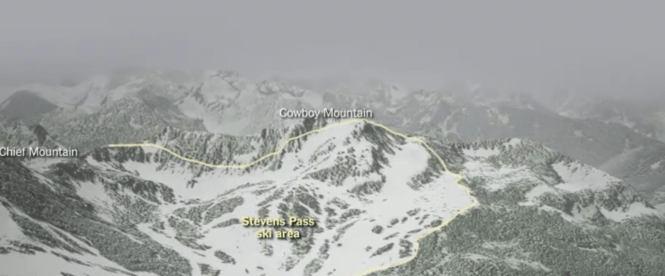
The top of Cowboy Mountain, about 75 miles east of Seattle, rises to 5,853 feet — about half the height of the tallest Cascades, but higher than its nearest neighbors, enough to provide 360-degree views. It feels more like a long fin than a summit, a few feet wide in parts. Locals call it Cowboy Ridge.

To one side, down steep chutes, is Stevens Pass ski area, which receives about 400,000 visitors each winter. To the other, outside the ski area’s boundary to what is considered the back of Cowboy Mountain, is an unmonitored play area of reliably deep snow, a “powder stash,” known as Tunnel Creek.

An interactive overview of the Cascades.

An interactive overview of the Cascades.

So far, only the first part of the story is available online. And it’s a delight. From the text, to the in-line photos and videos, this is a top-notch media experiment. I highly recommend clicking through and reading/partaking.

Update (12/21/12): The whole story is now online.

###

(hat tip: @KathrynSchulz)

Kevin Systrom on Instagram’s New Terms of Service

Following backlash from the Web concerning the new terms of service for Instagram, the co-founder of Instagram, Kevin Systrom, offers a classy, tempered response:

Advertising on Instagram From the start, Instagram was created to become a business. Advertising is one of many ways that Instagram can become a self-sustaining business, but not the only one. Our intention in updating the terms was to communicate that we’d like to experiment with innovative advertising that feels appropriate on Instagram. Instead it was interpreted by many that we were going to sell your photos to others without any compensation. This is not true and it is our mistake that this language is confusing. To be clear: it is not our intention to sell your photos. We are working on updated language in the terms to make sure this is clear.

To provide context, we envision a future where both users and brands alike may promote their photos & accounts to increase engagement and to build a more meaningful following. Let’s say a business wanted to promote their account to gain more followers and Instagram was able to feature them in some way. In order to help make a more relevant and useful promotion, it would be helpful to see which of the people you follow also follow this business. In this way, some of the data you produce — like the actions you take (eg, following the account) and your profile photo — might show up if you are following this business.

I am still wary of the connection to businesses that my photos may have, but at least I can rest assured that I own my photos and they won’t be sold without permission. For now, I am staying put with Instagram.

The Hum that Helps Hunt Crime

From BBC News, an interesting piece on how forensic scientists are using a digital hum to authenticate audio recordings:

Any digital recording made anywhere near an electrical power source, be it plug socket, light or pylon, will pick up this noise and it will be embedded throughout the audio.

This buzz is an annoyance for sound engineers trying to make the highest quality recordings. But for forensic experts, it has turned out to be an invaluable tool in the fight against crime.

While the frequency of the electricity supplied by the national grid is about 50Hz, if you look at it over time, you can see minute fluctuations.

The process is known as Electric Network Frequency analysis. How this research came to be:

A decade ago, a Romanian audio specialist Dr Catalan Grigoras, now director of the National Center for Media Forensics at the University of Colorado, Denver, made a discovery: that the pattern of these random changes in frequency is unique over time.

By itself, this might be an interesting electrical curiosity. But when you take into account that most digital recordings are also embedded with this hum, it becomes a game changer.

Comparing the unique pattern of the frequencies on an audio recording with a database that has been logging these changes for 24 hours a day, 365 days a year provides a digital watermark: a date and time stamp on the recording.
It’s less clear if this technique can be used in parts of the world with multiple grids (as opposed to the U.K., which has one grid).

A Hunger for Tales of Life in the American Cul-de-Sac

The New York Times profiles Nikolai V. Zlobin’s book on American culture. Zlobin is spot-on about many things in American culture:

On Russians raising their children:

In Russia, children are raised by their grandmothers, or, if their grandmothers are not available, by women of the same generation in a similar state of unremitting vigilance against the hazards — like weather — that arise in everyday life. An average Russian mother would no sooner entrust her children’s upbringing to a local teenager than to a pack of wild dogs.

Some general scrutiny:

Mr. Zlobin scrutinizes the American practice of interrogating complete strangers about the details of their pregnancies; their weird habit of leaving their curtains open at night, when a Russian would immediately seal himself off from the prying eyes of his neighbors. Why Americans do not lie, for the most part. Why they cannot drink hard liquor. Why they love laws but disdain their leaders.

Interesting bit:

Mr. Zlobin, who has lived in St. Louis, Chapel Hill, N.C., and Washington, finds his answers in middle-class neighborhoods that most Europeans never see. Readers have peppered him with questions about his chapter about life on a cul-de-sac. Most Russians grew up in dense housing blocks, where children ran wild in closed central courtyards. Cul-de-sac translates in Russian as tupik — a word that evokes vulnerability and danger, a dead end with no escape.

But this isn’t exactly correct: there are neighborhoods with true dead ends (they usually have a yellow sign as a warning). This is the literal tupik, not the cul-de-sac. There is no Russian equivalent to the word cul-de-sac, so I disagree with this translation.

Not a boring read.

The Danger of a Single Story

This is a wonderful post from The Squeaky Robot about the danger of single narratives:

Such is the danger of the single story. A single story, as eloquently illustrated by novelist Chimamanda Adichie, pigeonholes the world to the scope of one individual. It’s a narrative that compresses a diverse group into one single stereotype, one plot with no room for subplots or alternate story lines: Africans are poor, starving, and wholly isolated from everything “Western” (Adichie mentions how her American roommate was surprised to hear that there were Britney Spears fans in Nigeria), Middle Easterners are violent Muslims, and the Swiss are wealthy pacifists.  These are the stories we repetitively hear. As such, the way we perceive the world becomes inaccurate and oversimplified. This has serious real-world implications that present physical threats to our well being, like invasive TSA screenings,Russian skinheads targeting anyone who looks foreign, and unjust racial profiling in major cities. Just as venomous is the abstract, spiritual harm. Single stories hijack possibilities of realistic images and expectations: while traveling through China, a girl asked me why all American girls are rich, beautiful, tall, and skinny. Little girls in Nepal, Argentina, Romania, Peru, Mongolia, and Spain had similar questions, all the while expressing a collective desire to be white, blonde, and blue-eyed.

These stories also present an existential danger. We become sheltered by a self-fashioned bubble of cognitive dissonance and ignorance, one that saves us from a world that is complex and difficult to understand but also endlessly diverse, forever intriguing, and unimaginably colorful. Adichie warns about the dangers of the single story: “All of these stories make me who I am. But to insist on only these negative stories is to flatten my experience and to overlook the many other stories that formed me. The single story creates stereotypes, and the problem with stereotypes is not that they are untrue, but that they are incomplete. They make one story become the only story.” As with any kind of story, incompleteness is unsavory. And yet we live, often obediently, by unfinished yet close-ended narratives.

A wise conclusion here:

Single stories are not real. Single stories do not allow gray areas in a world where black and white do not exist, either. Where does that leave us? It leaves us in a world where little girls wish they were American for no good reason. It leaves us in a world where kids have to think twice before they wear a hoodie down any urban street, and anyone wearing a turban is considered to be nursing explosives in their shoes.

I recommend reading the whole thing. I’ve now subscribed to the blog as well.