Space Shuttle Endeavour Crosses Los Angeles

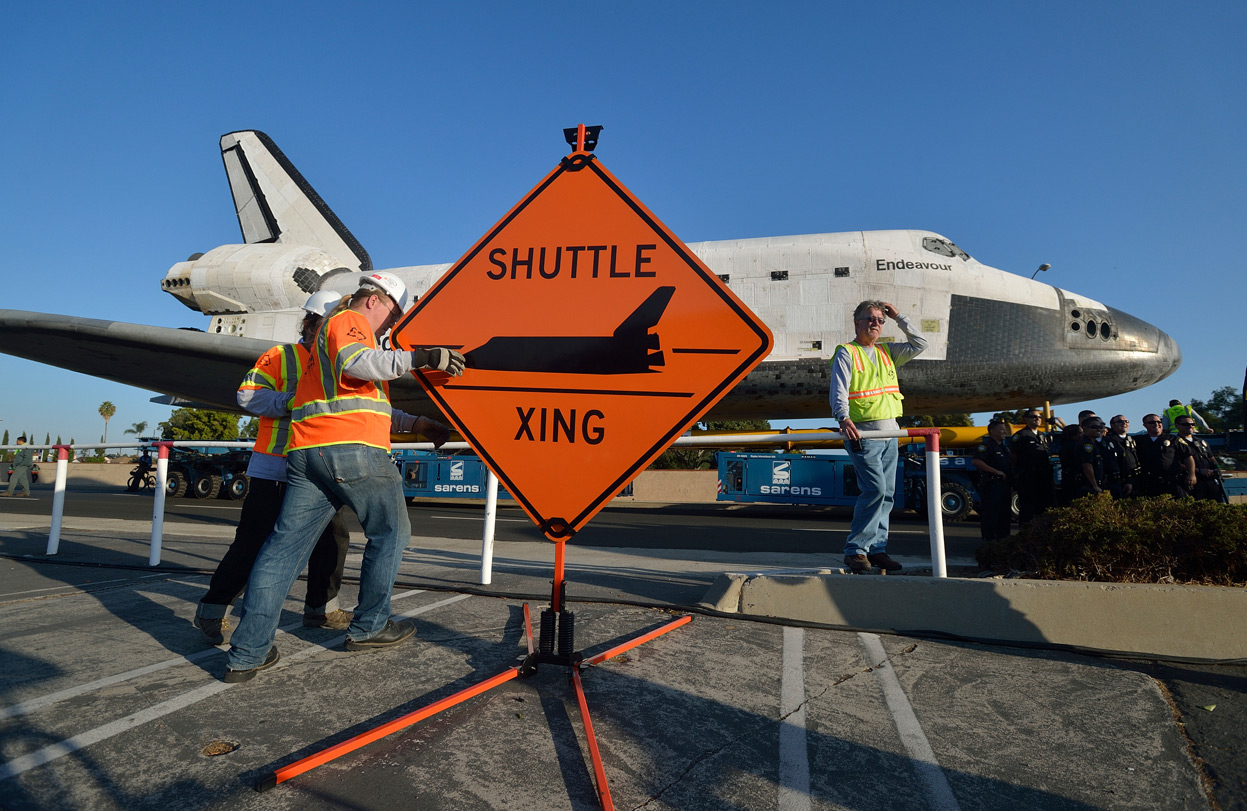
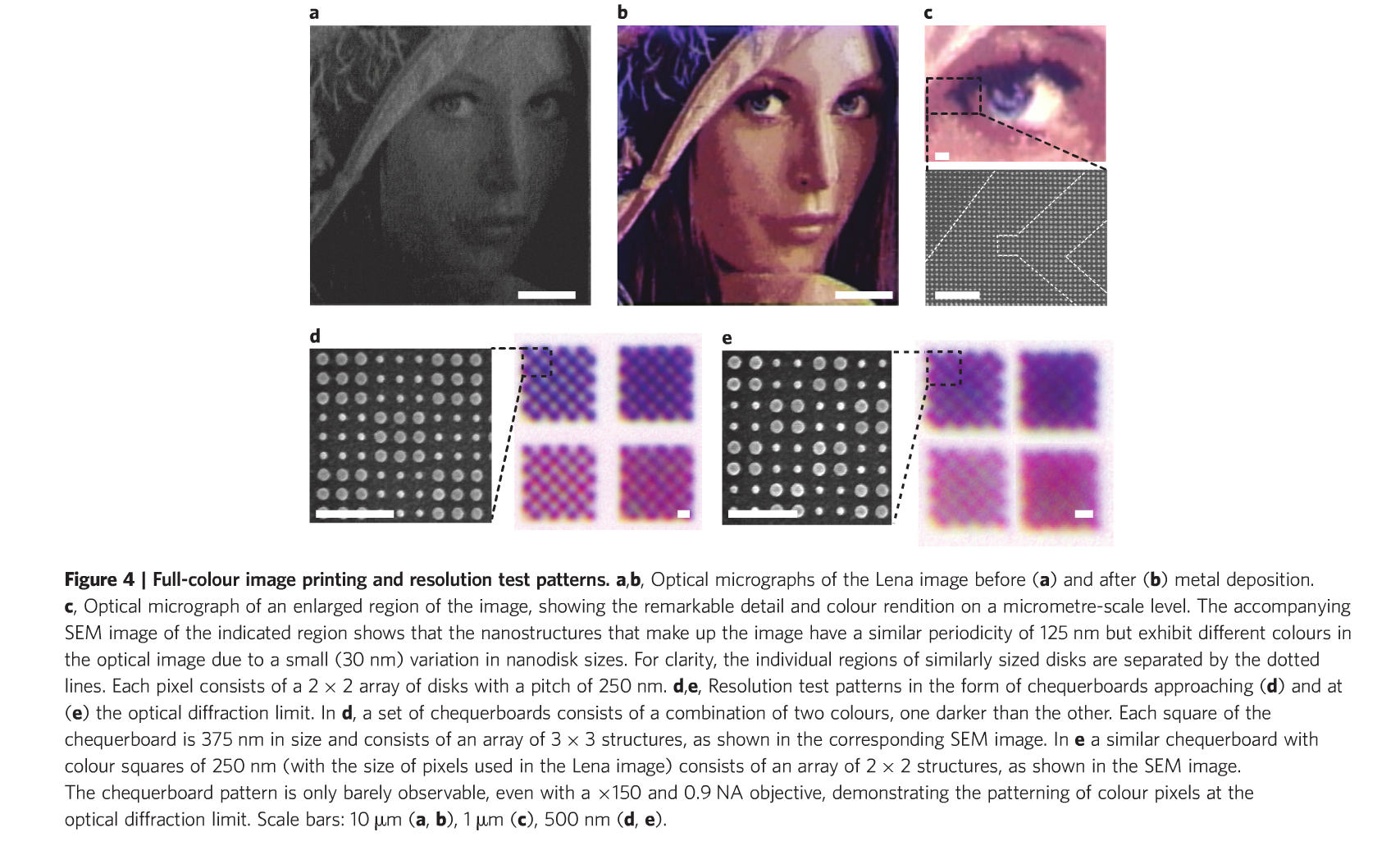
The Atlantic’s In Focus blog has a superb gallery of photos showing how Space Shuttle Endeavour has made its way through Los Angeles on its way to its final destination, California Science Center. This is an urban feast for the eyes:

Stopping by Randy’s Donuts in Los Angeles.

Traversing city streets in L.A.

Shuttle Crossing!

See the full gallery here.

I, of course, have a special connection to Shuttle Endeavour after having witnessed its last launch into space last year. You can read about my experience here.

Faking It: Manipulated Photography Before Photoshop

Take a look at the photograph below. Do you think it is real or fake? Or it is simply a matter of perception?

The New York Times considers this photograph, and a few others, in this piece about an exhibition focusing on manipulated photography at the Metropolitan Museum of Art:

A technical problem in the 19th century, for example, was that photographic emulsions were disproportionately sensitive to blue and violet light, resulting almost always in overexposed skies. So like many other landscape photographers, Carlton E. Watkins inserted properly exposed clouds from a different negative into the blank sky in a grand view of cliffs along the Columbia River in Oregon that he shot in 1867. In the exhibition you can compare one print without and one with the interloping clouds. Though artificially produced, the print with clouds looks more natural.

But, you might ask, is tweaking to achieve more realistic effects in the same category as flimflam? At about the same time that Watkins was photographing out West, the journeyman studio photographer William H. Mumler made a name for himself selling “spirit photographs,” in which ghostly visitors appeared in portraits of real people. If you look at his prints now, it is hard to believe that anyone could have been deceived by them, but many were, until the law intervened and charged him with fraud and larceny.

Mia Fineman, the organizer of the exhibition, claims that her goal is to make viewers understand that “a different view of photography prevailed among the intelligentsia for most of the 20th century.” Take a look at this photograph, for example:

 

Mary Todd Lincoln with the spirit husband, Abraham Lincoln.

Photographed by William Mumler, such a “spirit photograph” fooled many people in its heyday. So ferocious was the case against him that he was taken to court for fraud, with noted showman P. T. Barnum testifying against him. Though found not guilty, his career was over, and he died in poverty.

If you’re in New York, or visiting there in the next couple of months, the exhibition Faking It is something worth checking out.
Is the PC Over?

Jeff Atwood responds to MG Siegler’s post whose argument is that the PC is over:

I have an iPhone 5, and I can personally attest that it is crazy faster than the old iPhone 4 I upgraded from. Once you add in 4G, LTE, and 5 GHz WiFi support, it’s so fast that – except for the obvious size limitations of a smaller screen – I find myself not even caring that much if I get the “mobile” version of websites any more. Even before the speed, I noticed the dramatically improved display. AnandTech says that if the iPhone 5 display was a desktop monitor, it would be the best one they had ever tested. Our phones are now so damn fast and capable as personal computers that I’m starting to wonder why I don’t just use the thing I always have in my pocket as my “laptop”, plugging it into a keyboard and display as necessary.

So maybe MG Siegler is right. The PC is over … at least in the form that we knew it. We no longer need giant honking laptop and desktop form factors for computers any more than we need entire rooms and floors of a building to house mainframes and minicomputers.

They’re both right and wrong. Yes, we can do sophisticated tasks on our phones, and yes, my iPhone and iPad have become technologies which I use for browsing photos, sending email, checking out blogs. But the desktop remains the core for something that I can’t do on an iPad or iPhone: photo editing. Even as mobile versions of Photoshop and other photo software products exist, they pale in comparison to being able to edit images on the big screen (I have a 27 inch iMac). I am still waiting for the retina display iMac, one that will allow me to see the 5,616 × 3,744 resolution images coming from my Canon 5D Mark II without downsizing. I believe we’ll be there in one to two years.

Google’s Acquisition of Nik Software

Yesterday, Google made a huge acquisition in the photography space by purchasing Nik Software. However, many news outlets got it wrong, focusing on the SnapSeed app rather than Nik’s more feature-worthy products (such as Color Efex Pro and Silver Efex Pro, which I use in my post-processing).

Here is Trey Ratcliff on Google’s acquisition, a power user of Nik Software:

This is an exciting move from Google, and another indication that Google takes photography very seriously. Most of the silicon-valley-bubble-press probably does not know much about Nik Software, and doesn’t realize that this is a company built by and for professional photographers. Even though their software is designed for “pros”, I’m confident in saying that 90% of their customers are amateurs who are using these same tools to make them look like pros! Nik makes amazing tools, and I am really looking forward to seeing them bleed into my daily life of using Google+.

Now, the significance of this acquisition should not be overlooked. This is not like, say, the United States acquiring Puerto Rico (think FB and Instagram – where Facebook is a social-network of people acquiring a smaller social-network of people) but instead, this is like the United States buying Lockheed Martin.

It will be interesting to see what Google does with this acquisition. Nik’s software isn’t cheap (i.e., comparable to prices offered for stand-alone products such as Adobe’s Lightroom), and I am looking to see whether the products will become more affordable in the future.

Blog Break

I am going to be taking a break from updating this blog for about two weeks. I’m headed on a long road trip out West, hitting up Kansas, Colorado, and ultimately Yellowstone National Park in Wyoming.

I’ll have sparse internet access throughout my trip. If I don’t post any new updates here, be sure to check out my other space on the internet, Erudite Expressions, where I will post photos from my trip as often as I can.

Have a great holiday weekend, everyone!

UPDATE (9/4/2012): I am posting a lot of photos frequently on Instagram  (user name: eugenephoto). You can also find me on Flickr.

Color Printing Reaches the Ultimate Resolution

This piece in Nature made my jaw drop:

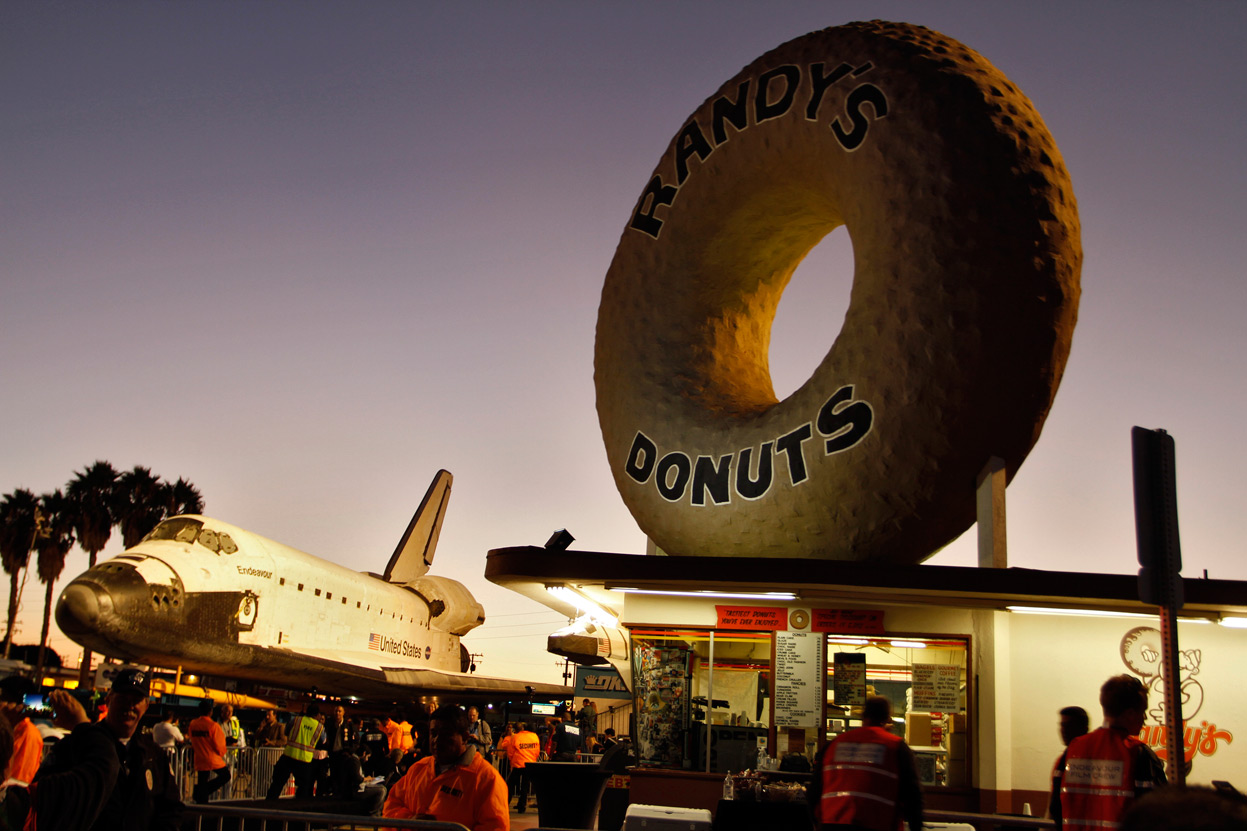
The highest possible resolution images — about 100,000 dots per inch — have been achieved, and in full-colour, with a printing method that uses tiny pillars a few tens of nanometres tall. The method, described today in Nature Nanotechnology1, could be used to print tiny watermarks or secret messages for security purposes, and to make high-density data-storage discs.

Each pixel in these ultra-resolution images is made up of four nanoscale posts capped with silver and gold nanodisks. By varying the diameters of the structures (which are tens of nanometres) and the spaces between them, it’s possible to control what colour of light they reflect. Researchers at the Agency for Science, Technology and Research (A*STAR) in Singapore used this effect, called structural colour, to come up with a full palette of colours. As a proof of principle, they printed a 50×50-micrometre version of the ‘Lena’ test image, a richly coloured portrait of a woman that is commonly used as a printing standard.

Optical Resolution Image testing with “Lena”. Click to see larger size.

That’s the summary of this paper, whose abstract describes the optical limit of resolution:

The highest possible resolution for printed colour images is determined by the diffraction limit of visible light. To achieve this limit, individual colour elements (or pixels) with a pitch of 250 nm are required, translating into printed images at a resolution of ~100,000 dots per inch (d.p.i.). However, methods for dispensing multiple colourants or fabricating structural colour through plasmonic structures have insufficient resolution and limited scalability. Here, we present a non-colourant method that achieves bright-field colour prints with resolutions up to the optical diffraction limit. Colour information is encoded in the dimensional parameters of metal nanostructures, so that tuning their plasmon resonance determines the colours of the individual pixels. Our colour-mapping strategy produces images with both sharp colour changes and fine tonal variations, is amenable to large-volume colour printing via nanoimprint lithography, and could be useful in making microimages for security, steganography, nanoscale optical filters, and high-density spectrally encoded optical data storage.

Also, I just discovered that you can read PDF papers/articles in ReadCube. Try it for the paper above here.

Curiosity Rover’s 17 Cameras

The Mars Curiosity rover made a safe landing on Mars in the early hours of August 6 (I stayed up and watched the event live). I knew the complexity of the rover, and Wired provides a good overview of Curiosity’s 17 cameras on board:

First up is the Mars Decent Imager (MARDI), which recently beamed back an amazing video of the rover’s nail-biting descent. MARDI turned on during the final few minutes of the “Seven Minutes of Terror” and recorded a full-color high-definition movie as the ground rushed up to meet the rover. With this film (and the coming high-def version), you get to experience what the wild ride down to the surface looked like.

MARDI is a 2-megapixel wide-angle camera mounted toward the front on the port side of Curiosity. The camera came to life just after the spacecraft’s heat shield jettisoned, taking images of a roughly 2 by 2.5-mile square, with a resolution of about 8 feet per pixel. The final fully-in-focus images came when the rover was about 15 feet off the ground. In addition to a thrilling film, MARDI will provide scientists the opportunity to know exactly where Curiosity landed and learn a bit about the surrounding area.

Of course, a telephoto lens is also included:

One of the biggest requests that scientists had for Curiosity was the addition of a telephoto lens. The previous rovers, Spirit and Opportunity, could see details about as well as a person would on Mars. But MastCam’s right camera has a 100-mm focal-length lens that provides three times the resolution of previous Mars rover cameras. It can distinguish between a football and a basketball from seven football fields away. While the left camera, with its 34-mm lens, can’t see as well, it will provide much wider views – about 15 degrees versus the right camera’s five degree field-of-view.

The raw images from Curiosity are being uploaded on the JPL site.

The Swimming Photographers at the Olympic Games

The New York Times has a nice profile of the photographers at the Olympic Games who bring us the underwater images. I had no idea they were certified scuba divers!

Sports photographers who shoot underwater used to free-dive to make these adjustments; now many, including Bello, Rose and Pretty, are certified scuba divers. That has given them the comfort of extended time underwater to perfect the art of capturing the world’s best swimmers from below. But it also leads to an odd sight every night at the London Aquatics Centre: a glass-and-plastic reef composed of 10 cameras and a platoon of frogmen who enter the pool soon after the last race to tend to them.

Preparation is everything:

Preparation is everything. Each camera has to be set up to focus on a specific race, or perhaps two lanes where a close finish is expected. Sometimes a camera will wait all day for a specific swimmer to splash into frame.

They use a handheld trigger to operate the shutter. It’s connected, via cable, to the camera at the bottom of the pool. Now that cameras are all digital, almost as soon as they are taken, the images can be viewed on a laptop.

Also worth reading is this post on Rob Galbraith’s blog, who interviewed Clive Rose before the Olympics on his camera equipment and set-up:

We [Getty Images] have been working with Canon on an underwater photography solution for the London Olympics for some time now, so we were lucky enough to be able to use a pre-production EOS-1D X with the new EF 8-15mm f/4L Fisheye USM lens during the test event. This was packed inside a prototype custom built waterproof housing. 

The EOS-1D X isn’t even available yet (or wasn’t then), so getting a housing to fit was one of the many challenges that we’ve had to deal with. The housing is connected via hardwire cables that run from the back of the housing along the pool floor to a laptop at poolside. There, we can use Live View to adjust the camera settings to suit which kind of shot we want. The camera is powered (always on) and connected to an Ethernet cable to allow us to draw the images up in real time. We can fire the camera either via the laptop through the Live View software, or hook the camera up to a trigger cable and attach the end of that to a PocketWizard, much the same way as you would for any other remote camera.


Stop Waiting

From one of my favourite photographers (and writers), David duChemin writes a superb post titled “Stop Waiting”:

My own soul is so sick of this culture of pragmatism that has people locked into their fears and their anxieties as though staying safe will guarantee them immortality. Live forever, but live in fear without ever reaching higher than the cookie jar; that doesn’t sound like a life to me, even if it were possible. There will always be reasons we think we can’t do what we long to do. Few of them, if any, are good. Amputees climb Everest. People with children travel the world. And talentless hacks make a decent living selling kitsch they call art. If they can do it, so can you. So can I. Not easily. Not cheaply. Not quickly. It might take a lifetime and cost us more than we imagined. But we can do it. It’ll be a little easier if we stop being so damn patient, if we stop waiting, get up and try, risk, fail, and repeat.

A must-read in entirety.

David’s book, Within the Frame, is the best $25 investment you can make if you’re into photography. It’s one of the best books I’ve read on the subject of photography. As David says: “Gear is good; vision is better.”

Instagram Photos in Sports Illustrated Magazine

Brad Mangin shares his story of how Sports Illustrated picked up his Instagram photos and is publishing them in the latest issue of the magazine. The set consists of 18 baseball photos spread over six pages. He describes his process in this blog post:

I shoot all of my pictures with the native camera in my phone. All editing and toning happens within the iPhone, too, using a few of my favorite iPhone apps. Once it looks good, I import the final image into Instagram. The final step in my workflow involves uploading the images to my PhotoShelter archive, which is where editors like Nate can easily view and download them for publication.

Some of my favorite apps include Dynamic LightSnapseed, and Camera+. I really love Snapseed for converting images to black and white and for toning my images. Dynamic Light is my favorite app for making a sky look dramatic and for adding great color to images. Once I get the image into Instagram I usually apply the Lo-fi filter and border if I want high contrast and rich color, or rich black and white. If I want muted colors with an old-school look, or if I want to make a black and white image into sepia-toned I use the Earlybird filter and border.

This is good news for photography and Instagram.